Skip to main content
Over a million pensioners pushed into higher rate tax

The number of pensioners paying higher rate tax has doubled in the past five years, according to a recent freedom of information (FOI) request from Sir Steve Webb, UK's former Minister of State for Pensions.
Now, over a million pensioners are paying higher rate tax or more this year, up from half a million in 2021-22, with the number of pensioners paying additional rate tax, a tax band originally intended for only the highest earners in society, having trebled during the same timeframe.
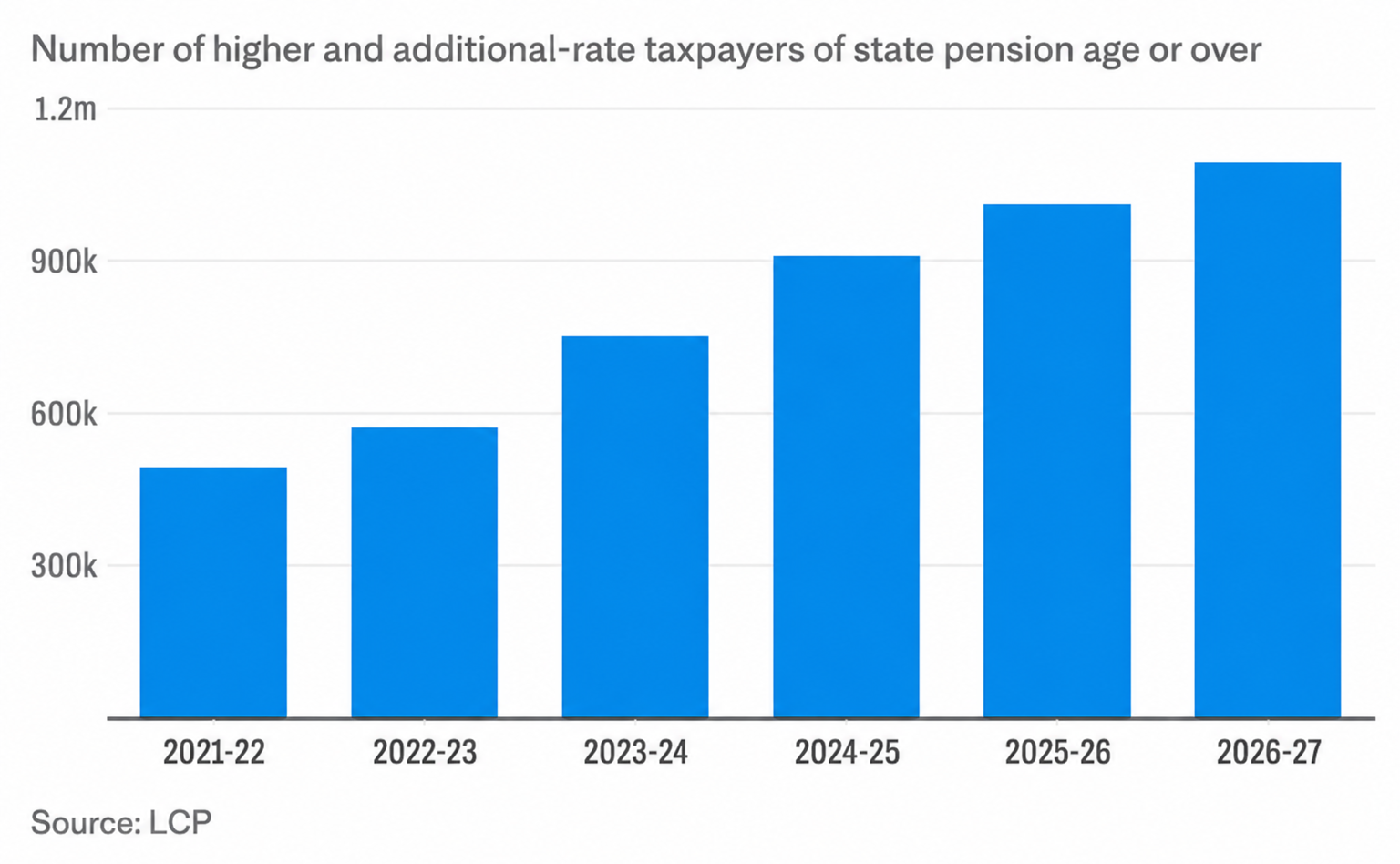
Once again, frozen thresholds or ‘stealth taxes’ are at the root of the issue, as the net widens, capturing more pensioners in the higher rate tax bands. According to the FOI data, the number of pensioners paying higher and additional rates of income tax has risen as state pension incomes increase in line with inflation while income tax thresholds remain frozen.
With thresholds set to stay at their current levels until April 2031, more retirees are likely to find that growing state and private pension income takes them into higher tax bands.
As this continues, it is likely to affect retirement planning for many workers. If a greater share of pension income is lost to tax, people may need to build up larger pension pots and savings during their working lives to achieve the level of income they want in retirement.
Arrange a free initial consultation
The forever frozen allowances
It has become the new norm for each Government to announce a further freeze on allowances, kicking the can down the road with each successive freeze, all the while taxpayers are being forced to hand over increasing amounts as fiscal drag pulls them ever further beyond the outdated thresholds.
One example of this is inheritance tax (IHT). Total IHT receipts collected by the Government has been steadily on the rise since the IHT threshold freeze.
This was initially announced by the then Chancellor, Rishi Sunak, in his 2021 Budget. The Budget outlined that the IHT threshold would be frozen for five years until 2026. However, after ex-Chancellor Jeremy Hunt’s 2023 Autumn Statement, it was confirmed that the freeze would be extended a further two years until April 2028, and then after Rachel Reeves’ 2024 Autumn Statement, this was extended once again a further two years until April 2030, and finally after her 2025 Autumn budget, it was again extended, this time until April 2031.
Many have been calling this move an example of ‘stealth tax’, as the freeze ultimately means an increasing number of Britons will fall into the tax threshold each year until the freeze ends in April 2031 – if indeed it does end and hasn’t been extended again by that time – and by then the Government will have collected billions of pounds worth of extra IHT from the taxpayer.
If you want to find out more, why not give us a call on 0333 323 9065 or book a free non-committal initial consultation with one of our chartered advisers to find out how can help.
Arrange a free initial consultation
This article is intended for general information only, it does not constitute individual advice and should not be used to inform financial decisions.
The Financial Conduct Authority (FCA) does not regulate tax advice.
A pension is a long-term investment not normally accessible until age 55 (57 from April 2028 unless the plan has a protected pension age). The value of your investments (and any income from them) can go down as well as up which would have an impact on the level of pension benefits available.
Your pension income could also be affected by the interest rates at the time you take your benefits. The tax implications of pension withdrawals will be based on your individual circumstances, tax legislation and regulation which are subject to change. You should seek advice to understand your options at retirement.