Skip to main content
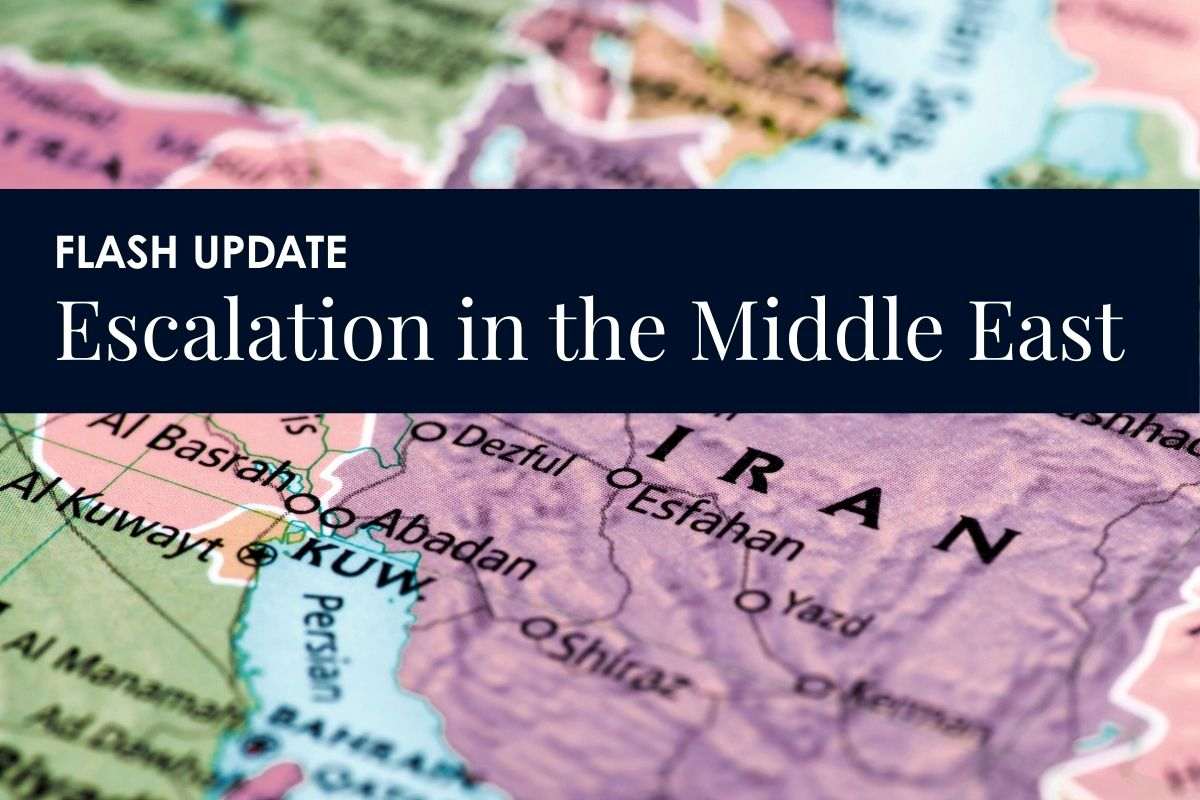
Escalation in the Middle East

On Saturday morning, the US and Israeli forces carried out attacks on Iran, killing the Supreme Leader Ali Khamenei and several other high ranking Iranian officials.
President Trump justified the action as necessary to eliminate the ongoing threats posed by Iran to the US and its allies, including the risk of nuclear proliferation. Iran has retaliated, by launching missiles at Israel and American military bases across the Middle East, including strikes in Bahrain, the United Arab Emirates (UAE), Qatar and Kuwait.
The range of possible outcomes from this intervention is extremely wide, and will depend on two key factors: how long the conflict lasts, and how Iran's political leadership is resolved, whether through an orderly succession or a broader collapse of the regime.
What this means for portfolios
As of Monday morning, there has been a broad sell off in equities and the US dollar has responded sharply.
The FTSE100 has seen more limited falls because of its sector weighting towards energy companies which have rallied on the back of the rising oil price.
Government bonds, which have been trending higher over the past month, have eased back slightly on the risk of energy prices feeding through to inflation.
Oil prices have risen 8% to $78/barrel, not just because of the direct impact on supply through disruptions in the Middle East but also because of the threat of Iranian attacks on the Strait of Hormuz, through which around 20% of global oil supply is shipped.
Once again, gold has proved to be an important source of diversification, with our gold ETF rallying around 4.5% in Sterling as we write. We added back some gold in our core portfolios last week, having reduced our exposure at higher prices in January. This has helped to cushion portfolios on a day when equities and bonds are both falling.
Looking ahead
Clearly this situation is unfolding as we write, and remains highly fluid. Equities always respond to geopolitical events by selling off initially; their subsequent performance depends entirely on the impact of events on corporate earnings and inflation.
If the Strait of Hormuz is unpassable for a prolonged period, energy prices will move higher from here, which will feed through to inflation and weigh on consumption. But it’s worth noting that the dependence on oil has diminished significantly since the early 70s when the Yom Kippur War triggered a severe bear market. Today, alternative suppliers and sources of energy help to mitigate the economic impact compared to the 1970s.
History shows that many geopolitical shocks have relatively short-lived effects on equity markets. We pointed out earlier in the year that with mid-term elections looming and an emboldened President Trump, geopolitical events were becoming more likely.
For now, we will remain highly vigilant and ready to respond whilst ensuring that portfolios remain well diversified.
As ever, we remain long-term investors and whilst short-term market volatility is something that informs our portfolio decisions, the importance remains in the long-term plan and remaining both prudent and disciplined in our planning together.
If you have any questions or concerns about your investments or your future plans, don’t hesitate to get in touch with your TPO Adviser or contact us through our website.
Arrange your free initial consultation
This information in this article is correct as at 02/03/2026.
This market update is for general information only, does not constitute individual advice and should not be used to inform financial decisions. Investment returns are not guaranteed, and you may get back less than originally invested; past performance is not a guide to future returns.