Skip to main content
Will 2024 see another recession?
The economy faces potential risks of a recession in 2024, indicated by negative economic trends, reduced investment in real estate and non-residential sectors, and potential weaknesses in global trade and labour market conditions.
Core inflation has remained above the Federal Reserve's target, prompting a more hawkish stance and increased attention to tackling inflationary pressures. The market's response to this is reflected in rising US bond yields, while the NASDAQ 100 continues to climb, driven by the AI revolution and increased retail investor participation. However, the labour market is strong, evident through robust job creation and low unemployment claims.
Looking Back: 2023 Market Roundup
We take a look back at market activity from the last six months, to help form future predictions in the economy.
Labour Market Strength and Inflation
The labour market is a key indicator of economic health. A robust labour market implies sustainable employment, allowing the Federal Reserve to focus more on controlling inflation. Recent data shows that US job creation (nonfarm payrolls) exceeded expectations in April and May, signalling strength in job creation. Additionally, unemployment claims remain relatively low, indicating a resilient labour market.
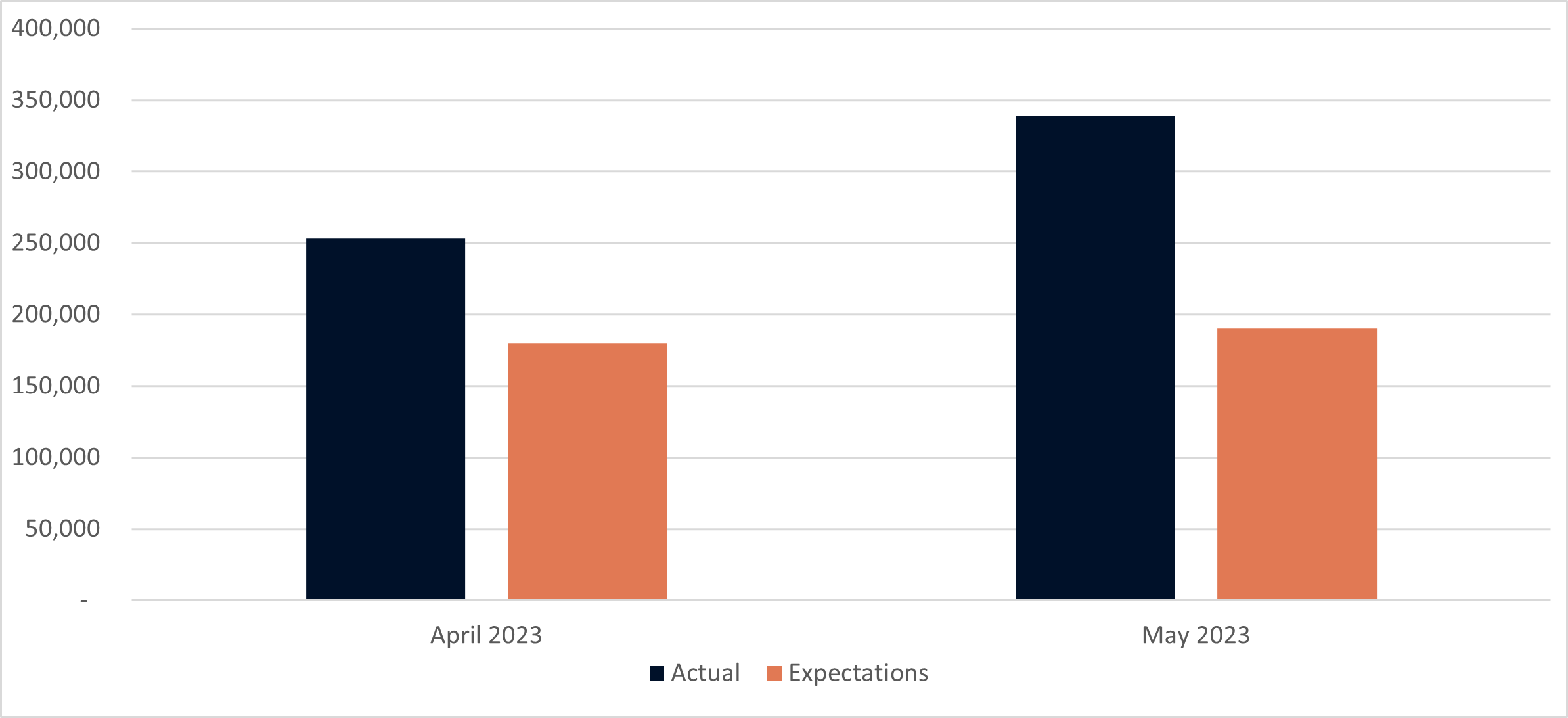
Figure 1. US Nonfarm Payrolls. (Source: BLS, 2023.)
Wage growth is another factor closely monitored by the Federal Reserve. Currently, it stands at around 6% year-on-year. Higher wages translate to increased consumer spending, thereby driving inflation. Personal spending has also witnessed a notable increase, contributing to elevated inflation levels within the US.
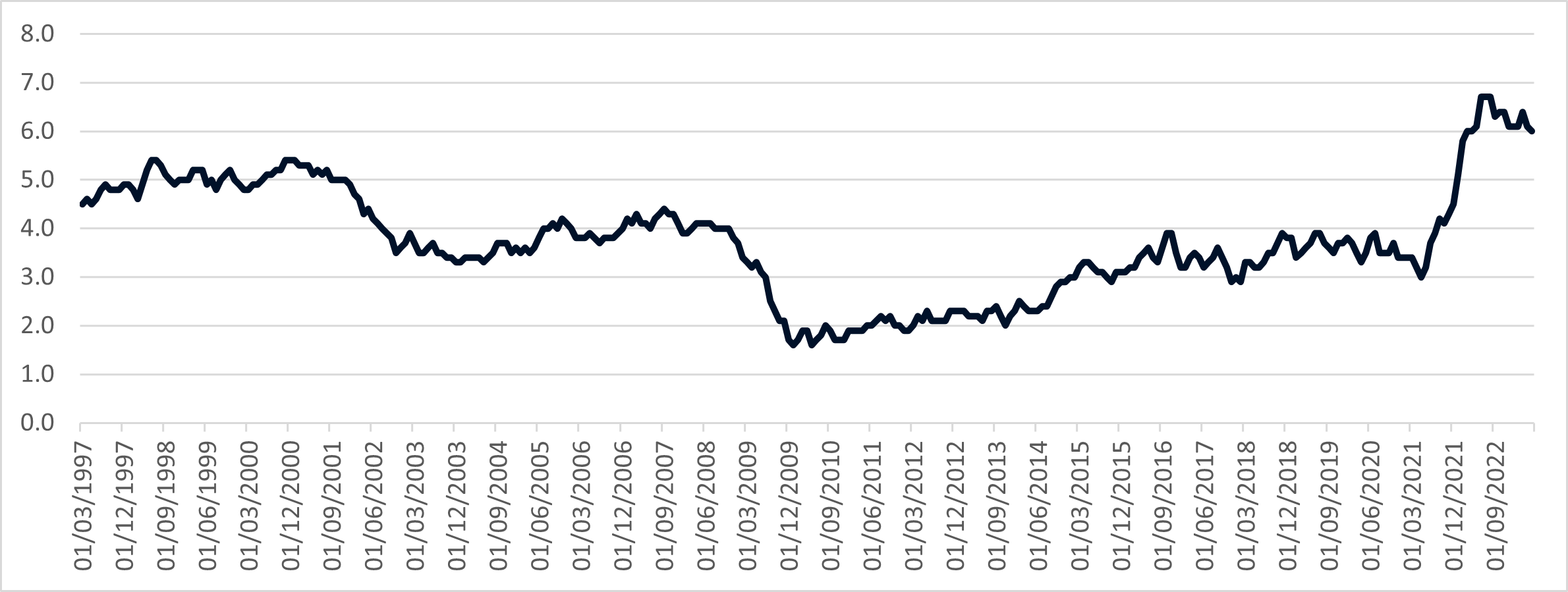
Figure 2. US Wage Growth. (Source: Atlanta Fed, 2023.)
Core Inflation and Federal Reserve's Focus
Core inflation, which excludes volatile sectors like energy and food, remains above the Federal Reserve's target of 2%. This persistent elevation in core inflation prompts the Federal Reserve to adopt a more hawkish stance. With a strong labour market, their attention is primarily directed towards tackling inflationary pressures.
Federal Reserve Members' Outlook
Several Federal Reserve members expressed their views in May, providing insights into the future direction of monetary policy. Christopher Waller, a voting member of the Federal Reserve Committee, suggested further hikes in July. Federal Reserve members updated their June “dot plot” projections of monetary policy and revised their interest rate expectations upwards. The growing hawkish sentiment among Federal Reserve members indicates their commitment to addressing inflationary concerns among a backdrop of strong consumer spending.
Bond Yields, Equity Markets, and the Tech Revolution
The market response to the Federal Reserve's outlook can be observed in the movement of yields. As expectations of rate hikes increased, US bond yields, such as the US 2-year and 10-year, started moving up. This shift in yields reflects market participants' belief that the Federal Reserve will prioritise controlling inflation.
Interestingly, despite rising yields, the NASDAQ 100, a technology-focused growth index, continued to climb. This divergence from the conventional expectation, where rising discount rates lead to underperformance in growth stocks, can be attributed to the AI revolution. Companies like Microsoft, Apple, Amazon, Nvidia, Meta, and Alphabet, which contribute significantly to the NASDAQ 100, have been capitalizing on the potential of artificial intelligence (AI) and witnessing substantial growth. This trend has attracted retail investors, driving their increased participation in US equities.
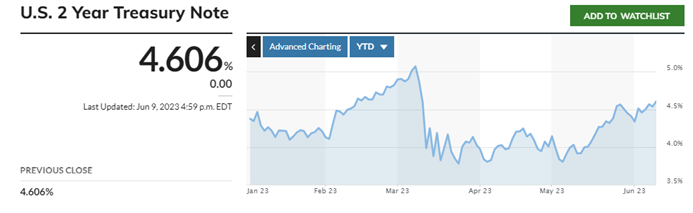
Figure 3. US 2-Year Treasury Bond Yield. (Source: MarketWatch, 2023.)
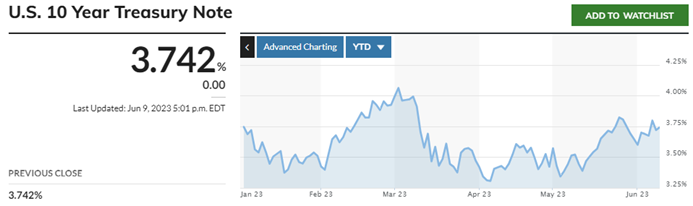
Figure 4. US 10-Year Treasury Bond Yield. (Source: MarketWatch, 2023.)
Narrow Market Breadth and Retail Investor Sentiment
The performance of the S&P 500, the benchmark index, reveals a narrower breadth, with a few dominant companies outperforming the rest. This divergence from historical patterns indicates that the market is currently driven by a handful of large-cap stocks. Retail investors, driven by the fear of missing out, are keen to tap into the growth potential of these AI-focused companies, leading to increased investment in US equities.
Liquidity and the US Debt Ceiling Crisis
The recent uptick in liquidity in the market is another notable trend. Despite the US debt ceiling crisis, where the government faced borrowing limitations, liquidity has increased. This unexpected outcome can be attributed to the counterbalance between government spending and bond issuance. As the government continues to spend while facing borrowing constraints, liquidity injections occur, impacting market dynamics.
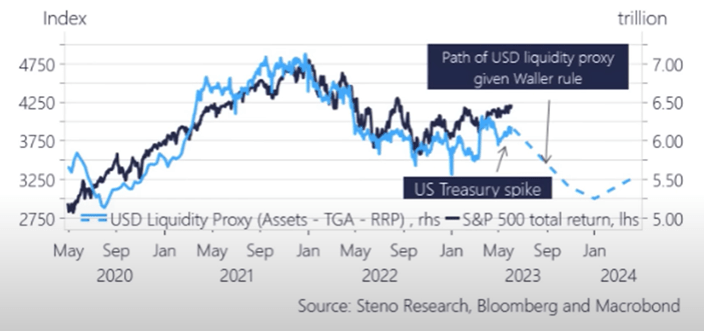
Figure 5. Liquidity Driving Markets. (Source: StenoResearch, 2023.)
Looking Forward: 2024 Recession Risk
Leading Economic Indicators and Investment Patterns
The Conference Board's Leading Economic Indicator, comprising various variables, serves as a reliable measure of economic growth and recessionary signals. Currently, the leading indicator exhibits a deep negative trend, indicating a possible recession in the near future.
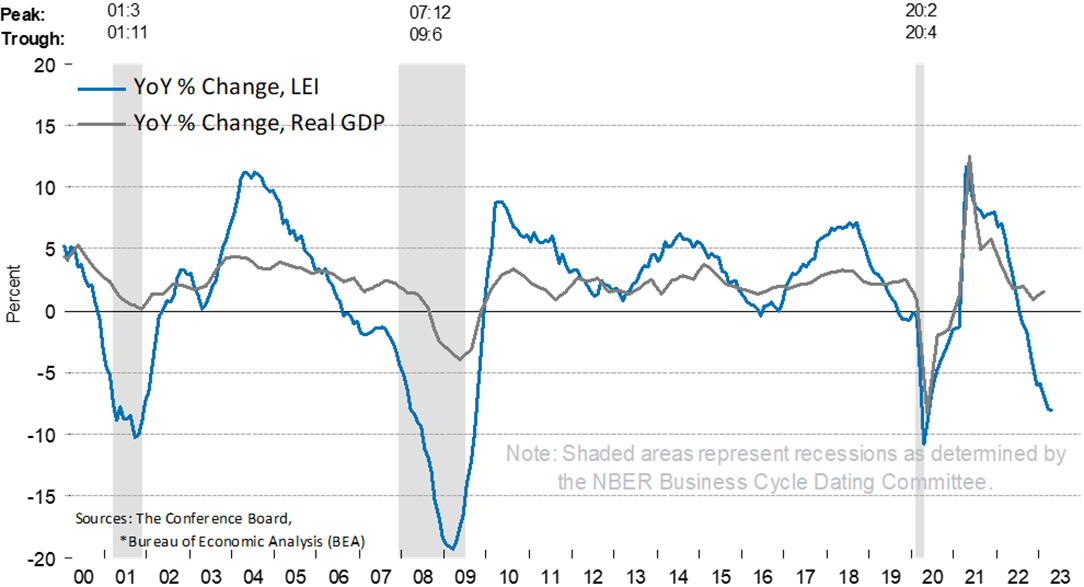
Figure 6. Leading Economic Indicator. (Source: Conference Board, 2023.)
Examining specific segments of the economy, such as private residential fixed investment, reveals a significant relationship between investment in real estate and economic downturns. As interest rates rise, demand for mortgages and housing decreases, resulting in reduced investment in the construction sector. Given that residential real estate investment peaked about six months ago, it aligns with the 6 to 12 months timeline for a potential recession. Non-residential investment, which includes spending on factories and machinery, is also a critical indicator. The Goldman Sachs Capital Expenditure (CapEx) tracker suggests a potential decline in non-residential fixed investment, further emphasising the possibility of an economic slowdown.
Global Trade Labour Market Conditions
To gauge the demand for goods in the economy and the global market, alternative indicators such as cardboard box shipments and firm expenditures on freight provide valuable insights. Declines in these indicators during previous recessions demonstrate the interconnectedness between global trade and economic downturns.
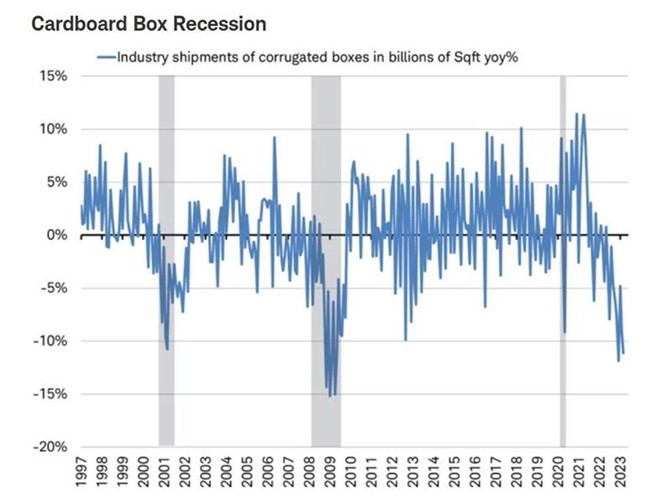
Figure 7. Cardboard Box Demand. (Source: DisruptorStocks, 2023.)
Labour Market Conditions
Analysing the labour market, employment in temporary help services serves as an effective leading indicator. Historically, peaks in temporary employment have preceded recessions, and negative year-over-year growth in this sector has consistently been followed by a recession. While the labour market remains robust, initial jobless claims have recently ticked up, signalling potential weakness in the future.
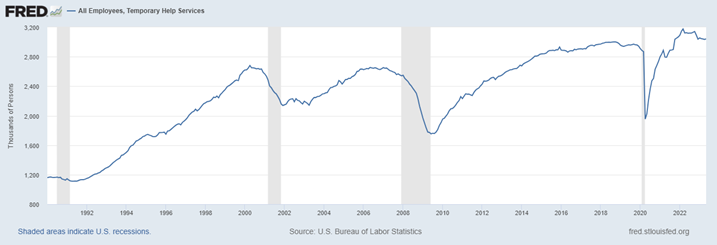
Figure 8. Employment of Temporary Help Services. (Source: Federal Reserve, 2023.)
Consumer Strength and Financial Stress
Consumer spending, driven by excess savings accumulated during the pandemic, has been a significant factor supporting the economy. However, the estimated excess savings are gradually being depleted, indicating a potential decline in consumer spending within the next 6 to 12 months. Rising delinquencies on credit cards and auto loans indicate rising financial stress, and restarting student loan payments could further strain consumer finances and lead to reduced spending in various sectors, negatively impacting economic growth.
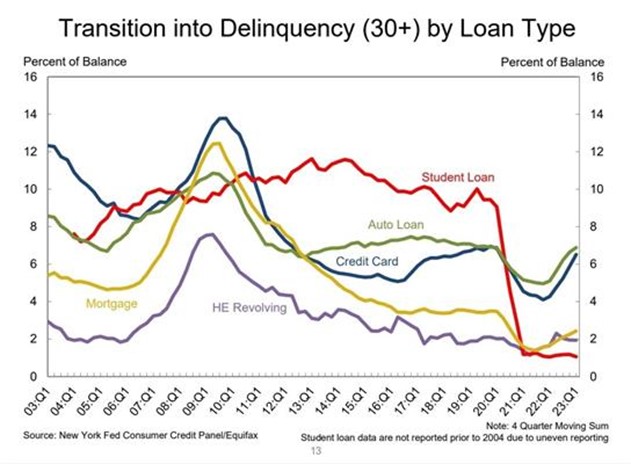
Figure 9. Loan Delinquencies. (Source: NY Fed, Equifax, 2023.)
Summary
Despite the potential risks, several factors may help mitigate the impact of a recession. Household leverage (personal debt) is currently low, with debt service payments as a percentage of disposable income at multi-generational lows. This provides households with flexibility to borrow and spend, potentially bolstering economic activity. Additionally, business debt as a percentage of GDP, while reasonably high, is manageable, with a significant portion of debt not coming due until later years and borrowings locked in at low rates.
Government spending remains substantial, which historically has injected demand into the economy. The government's current deficit of ~5% of GDP suggests a level of support that can cushion the impact of an economic downturn. Moreover, the Federal Reserve's policy space, with room to lower interest rates if necessary, and the demonstrated ability of the Fed and Treasury Department to respond swiftly during the 2020 crisis provides additional reassurance.
In summary, there are some worrying indicators of recession. However, a combination of resilient consumers with low levels of personal debt and Governments willing to step in when necessary might keep a full-blown recession at bay.
Please contact your adviser if you require assistance, or if you're looking to get started and have £100k or more in investable assets, arrange your free initial consultation.
Arrange a free initial consultation
Note: This Market update is for general information only, does not constitute individual advice and should not be used to inform financial decisions. Additionally, past performance is not a guide to future returns. Investment returns are not guaranteed, and you may get back less than you originally invested.
First Republic – Another Banking Collapse. Should we be worried?
The recent collapse of First Republic, the second-largest bank failure in US history following the 2008 demise of Washington Mutual, has sent tremors through the financial sector. This article aims to delve into the causes and implications of the collapse, while providing a comparison to previous banking crises. Analysing the factors leading to First Republic's downfall will shed light on the challenges faced by the US banking sector and the subsequent ripple effects on the broader economy.
Comparing First Republic to Past Banking Collapses
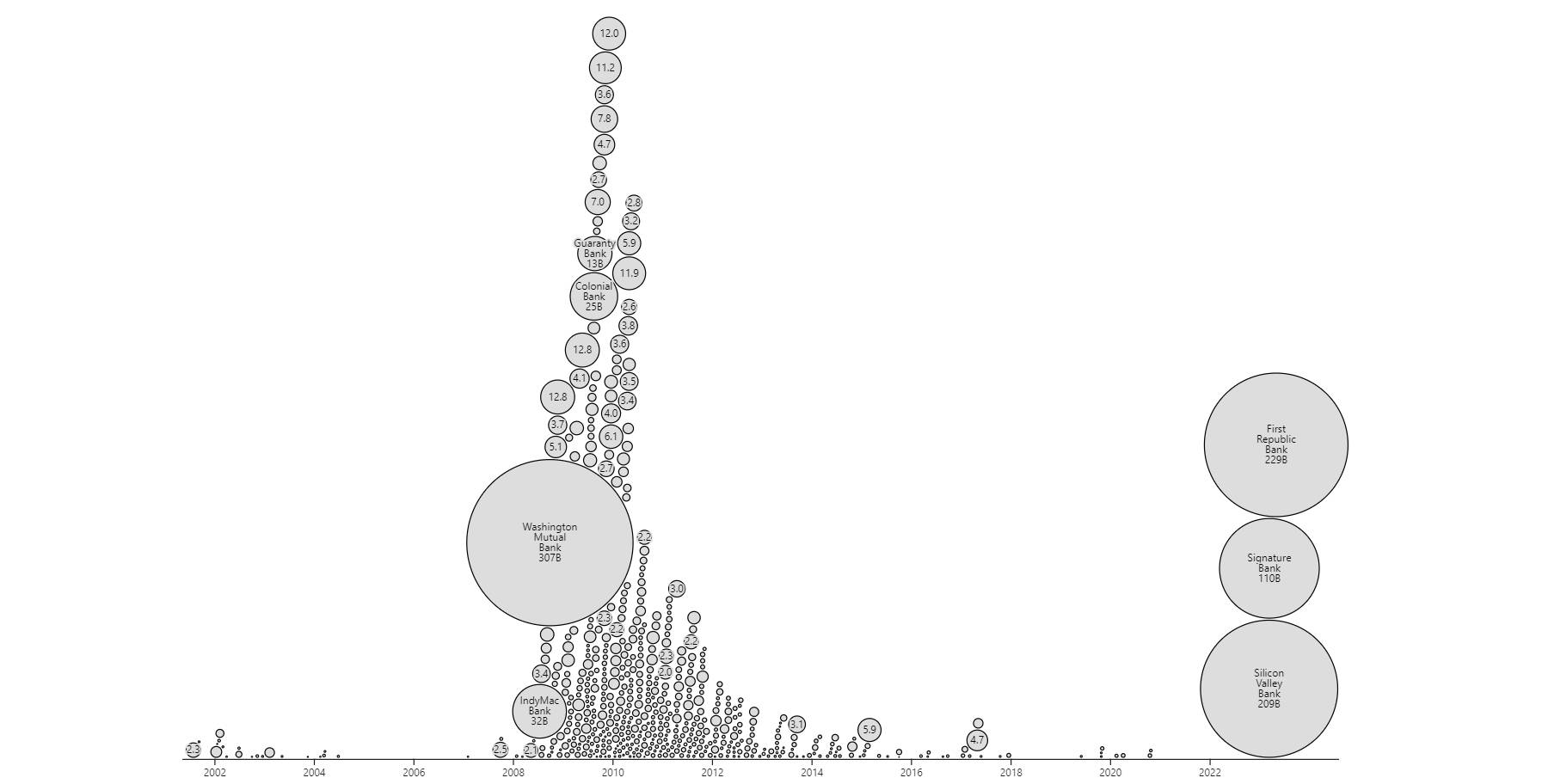
Figure 1. Bank Collapses. (Source: Observable, 2023.)
The magnitude of First Republic's collapse cannot be underestimated. Using a chart ranking US banking collapses by both date and size, it becomes apparent that the absolute impact of First Republic and its predecessor, Silicon Valley Bank (SVB), is significant. However, when considering the sheer number of collapsed banks, the recent events pale in comparison to the numerous failures experienced from the 1950s to the 1980s.
The Role of SVB and Uninsured Deposits
The troubles for First Republic began with the collapse of SVB, which caused investors to panic and raised concerns about the stability of the US banking sector. One crucial aspect that exacerbated the situation was the fact that 67% of First Republic's deposits were uninsured. While the Federal Deposit Insurance Corporation (FDIC) provides coverage up to $250,000 per person, amounts exceeding this threshold are left unprotected. As SVB crumbled, investors withdrew their funds from perceived risky regional banks, seeking to diversify their uninsured deposits. This mass movement of capital triggered a degree of panic within the US banking system.
Asset Liquidation Attempts and the Struggle of First Republic
Following a pattern similar to SVB, First Republic attempted to sell its assets to mitigate the crisis. However, the majority of the bank's net interest income and asset base consisted of government bonds, municipal securities, and real estate loans. The latter, being less liquid, presented challenges in meeting deposit requests, rendering the bank unable to fulfill its obligations.
The Wider Context
In this section, we will delve into the current state of the banking system and explore the conditions that have contributed to the challenges faced by financial institutions. By examining Q1 earnings reports from major banks, analysing deposit and loan trends and evaluating the impact of unrealised losses on securities, we can gain insights into the overall health of the banking sector and identify areas of concern.
Q1 Bank Earnings and Performance
When reviewing the Q1 earnings of prominent banks, it becomes evident that, on the whole, they have remained relatively healthy. JP Morgan emerges as a standout performer, experiencing substantial growth with a 50% increase in net income and a 25% rise in revenue compared to the previous year. With improved margins and positive performance across the board, most major banks have fared well in the first quarter.
Interest Rates and Income
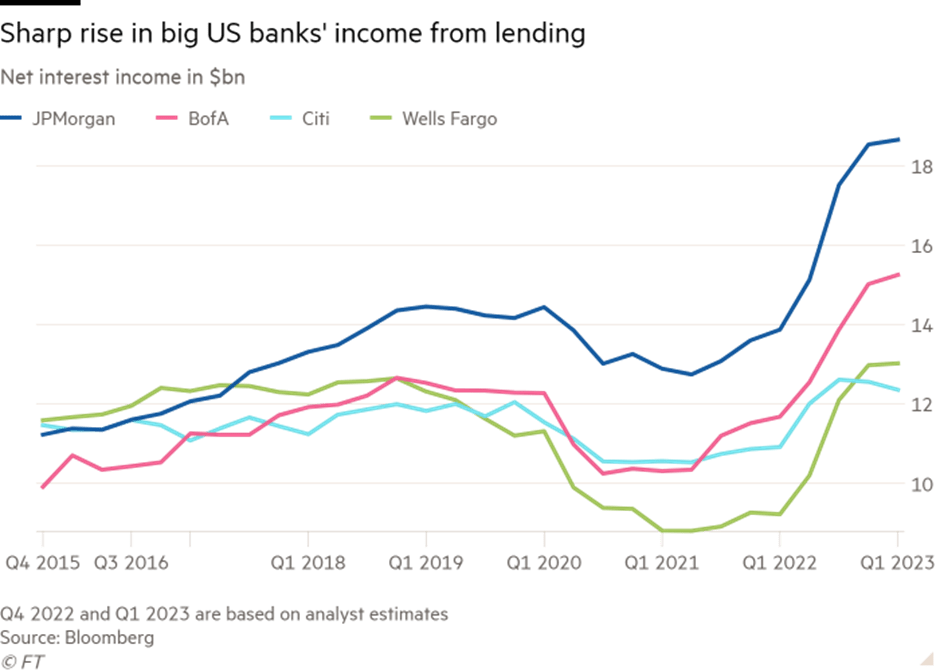
Figure 2. Bank Interest Income. (Source: FT, 2023.)
The increase in interest rates has played a significant role in boosting banks' profitability. As interest rates rise, banks charge higher rates on new loans, resulting in increased interest income as they can achieve greater margins on their loans. Notably, JP Morgan's shorter term loan book has allowed them to take advantage of the higher interest rates more swiftly.
Deposit and Loan Trends
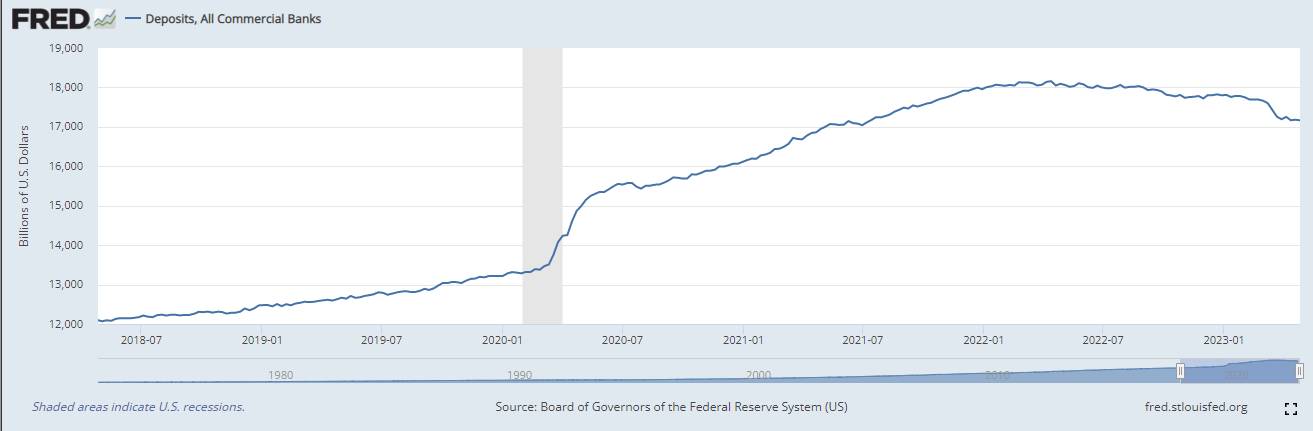
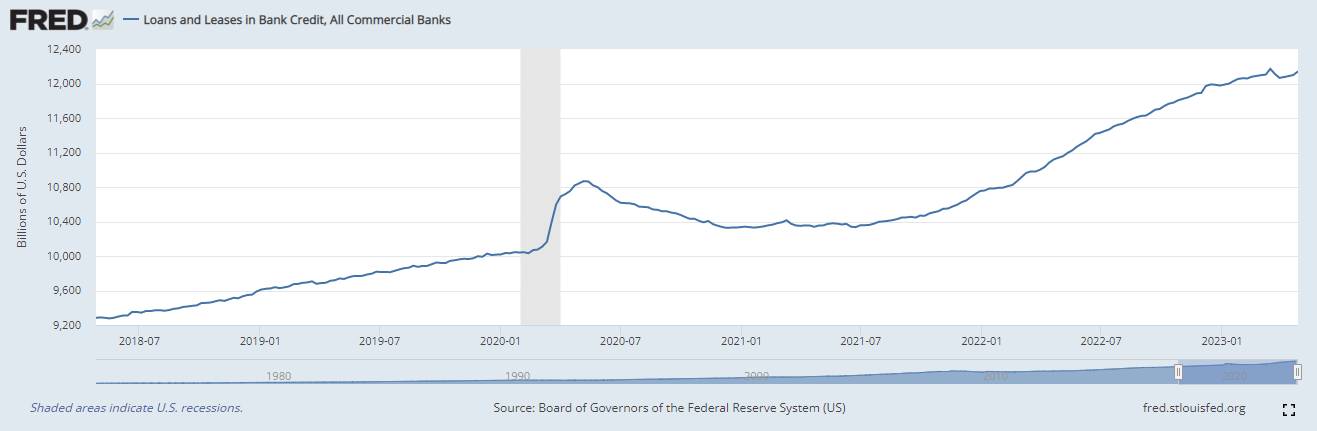
Figure 3. US Commercial Bank Deposits (top) and Loans (bottom). (Source: St Louis Fed, 2023.)
Traditionally, there is a positive correlation between deposits and loans, with deposits often created through loan extensions. However, since mid-2022, deposit levels have been declining and in recent weeks they have accelerated. in deposits made. This decline can be attributed to flows into money market funds. Despite the decline in deposits, loans extended to the real economy have remained relatively strong, although there has been a slight slowdown. This divergence raises concerns about the future impact on banks' liquidity and ability to lend.
Shifts in Deposit Distribution
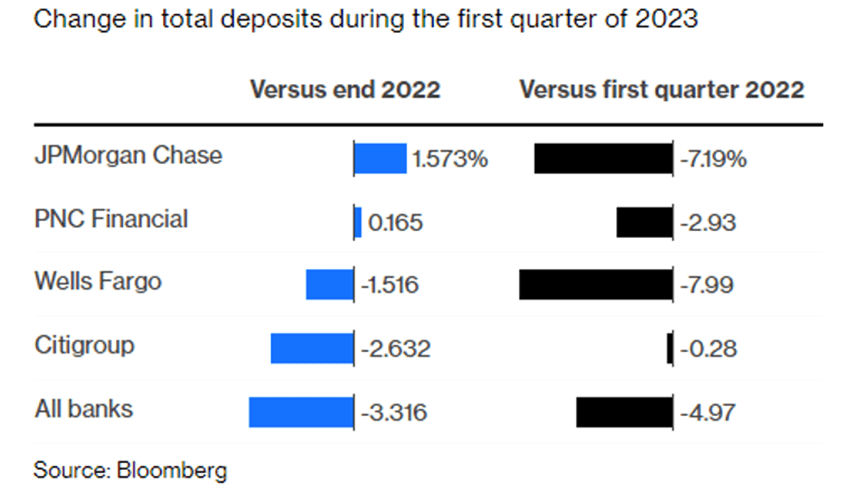
Figure 4. Q1 2023 Deposit Change by Bank. (Source: Bloomberg, 2023.)
Examining the changes in deposits among the 150 largest banks, it becomes evident that deposit flight has not affected all banks uniformly. JP Morgan, in particular, has benefited significantly from this shift. Deposits have moved away from weaker and smaller banks, flowing into larger and stronger institutions.
Why Are Depositors Nervous? Unrealised Losses on Securities and Capital Adequacy Ratios
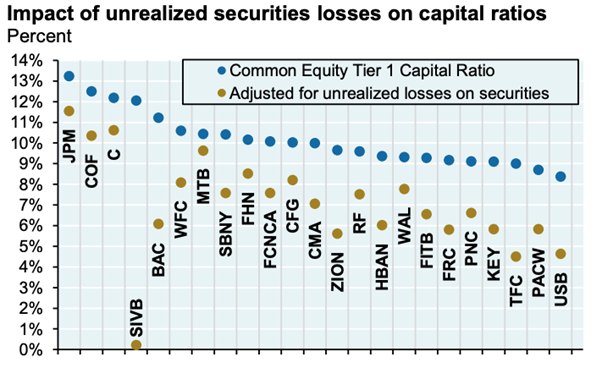
Figure 5. Impact of unrealised losses on securities holdings on banks capital adequacy ratios. (Source: SeekingAlpha, 2023.)
Unrealised losses on securities have impacted banks' capital adequacy ratios to varying degrees. While smaller banks have experienced more significant impacts, larger, institutionally important banks have weathered the storm relatively well. The fact that larger banks have maintained safer leverage ratios provides some reassurance regarding their stability compared to smaller banks.
Why Are Depositors Nervous? Challenges in Commercial Real Estate
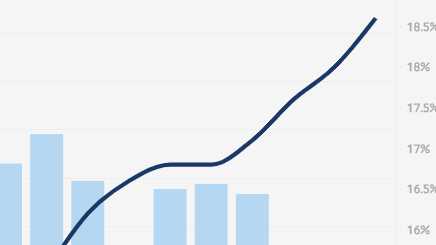
Figure 6. Rise in US office vacancy. (Source: FDI Intelligence, 2023.)
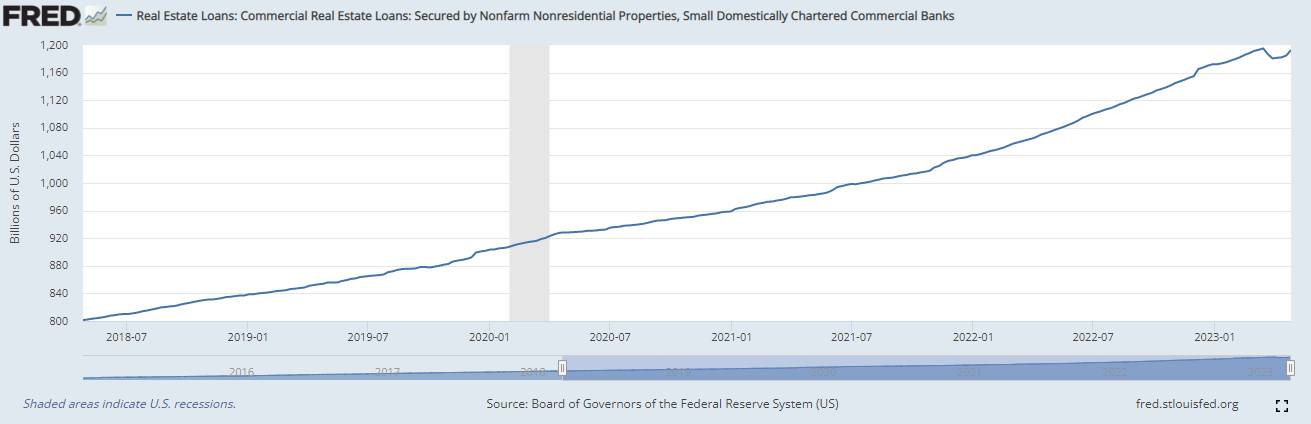
Figure 7. Rise in small US Bank lending to commercial real estate. (Source: St Louis Fed, 2023.)
Commercial real estate, particularly office spaces, has become an area of concern for banks. With the rise in remote work and increased office vacancies, tenants are struggling to make payments, impacting the loans tied to these properties. Small banks have a higher exposure to commercial real estate loans and this exposure has contributed to depositors' nervousness and their concerns about the value of their deposits.
Why Are Depositors Nervous? Funding Mix and Profitability

Figure 8. Proportion of US Small Bank funding themselves through deposits. (Source: St Louis Fed, 2023.)
The funding mix of banks has shifted, with a notable move away from deposits and toward borrowing from capital markets. While deposits are generally considered safer and more stable, capital market borrowing carries higher risks and interest costs. Banks face increased scrutiny from capital market investors, who can swiftly withdraw funding. This shift in funding mix poses challenges to profitability for banks due to higher funding costs in capital markets.
Conclusion
The health of the banking system is multifaceted and impacted by various factors. While major banks have displayed overall stability and positive performance, concerns regarding deposit flight, commercial real estate, and funding mix pose challenges for smaller banks. The continued relative strength of larger banks, such as J P Morgan, will be an important factor in preventing a crisis amongst smaller regional US banks becoming a more significant broader, economic crisis.
Please contact your adviser if you require assistance, or if you're looking to get started and have £100k or more in investable assets, arrange your free initial consultation.
Arrange a free initial consultation
Note: This Market update is for general information only, does not constitute individual advice and should not be used to inform financial decisions. Additionally, past performance is not a guide to future returns. Investment returns are not guaranteed, and you may get back less than you originally invested.
Alternative Investing Guide

Shhh Insiders Guide to Wealth Management