Skip to main content
Slow and steady stocks eclipse Big Tech in July

July 2026 was dominated by three interlocking themes: a return to hostilities in the Middle East that sent oil prices sharply higher, a reversal in ‘big tech’ stocks, and a US Federal Reserve decision that unsettled bond markets.
Equities
Global equity markets were deeply divided this month, with a wide gap between AI linked companies and traditional businesses. The big story was a sharp drop in AI infrastructure and microchip stocks, triggered by growing investor panic that tech giants might cut their budgets for AI chips. This sell-off was especially prominent in South Korea, where the main stock index relies heavily on memory chip giants Samsung Electronics and SK Hynix. Because of this localised ‘crash’, emerging markets fell behind the rest of the world.
Arrange your free initial consultation
A major driver behind this market reversal involved Situational Awareness LP, the AI hedge fund run by 25-year-old former OpenAI researcher Leopold Aschenbrenner. The fund had grown to $45 billion in assets after gaining over 400% in the first half of 2026.
However, the fund had made significant bets on AI infrastructure stocks whilst betting against software stocks. When the market turned against these positions, the fund's use of borrowed money triggered margin calls (loan repayments) from their banks. As a result, the fund was forced to sell its entire $16 billion stock portfolio in a single block trade in late July. This forced sale shook the market, but once the fund finished dumping its shares, the targeted AI stocks quickly rebounded. Meanwhile, the broader S&P 500 managed to soften its losses thanks to strong gains in healthcare and banking, where trading desks reported strong earnings.
In contrast, UK equities showed strong performance, with the FTSE 100 reaching record-breaking highs throughout the month, a slight improvement from its previous February peak. The index's limited exposure to semiconductor and technology names proved an advantage in this environment, while heavy weightings in well-performing energy and financials acted as a positive tailwind. The FTSE 250 also gained to a lesser extent, with mining and industrial stocks contributing to strong FTSE All-Share performance.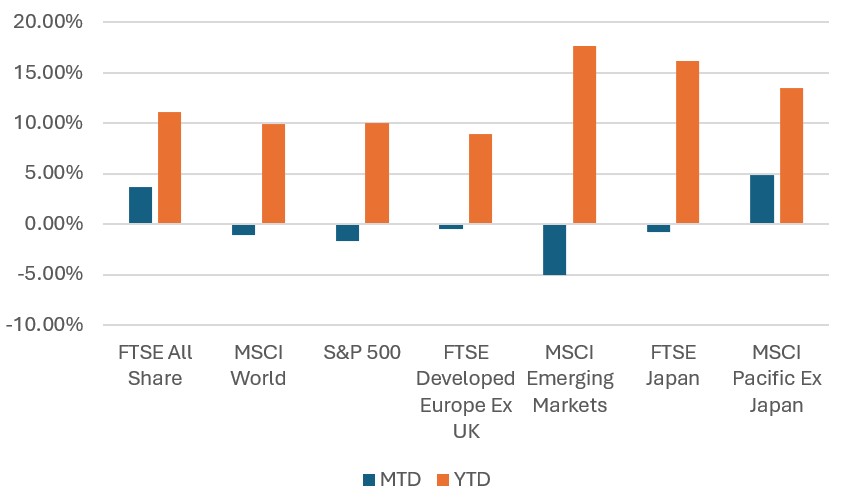
Figure 1: Equity market returns (Source: Bloomberg, July 2026)
Fixed Income
The July US Federal Reserve meeting was one of the more consequential of recent years, even though the Fed held rates steady in a 9-3 vote, with the three dissenters favoring an immediate increase, signaling the growing internal pressure to address concerns of increasing inflation. Chair Warsh's decision to provide no forward guidance, reaffirming only the Fed's unwavering commitment to its 2% inflation target, produced a sharp market reaction given the lack of action to achieve this. The 30-year Treasury yield surged to its highest level since 2007, leading to a marked steepening of the US yield curve, indicating concerns about future inflation and higher long term interest rates.
UK Gilts followed a similar trajectory, as the surge in oil prices over the month rekindled fears that the Middle East conflict could reignite domestic inflation and prompt further Bank of England tightening. The Bank of England voted 6-3 to hold rates unchanged at its July meeting, with three members favoring an increase.
Corporate bonds took a hit from two sides in July
First, a general rise in market interest rates reduced overall bond returns.
Second, the price gap between corporate and government bonds widened as investors grew nervous about the massive amount of debt tech companies are taking on to fund AI.
Big Tech firms have been tapping into both the stock and bond markets to pay for their AI expansion plans. At the same time, the cost of buying insurance against a potential tech default climbed during the month, showing that investors are getting worried about how long this AI build-out will take and how much it will ultimately cost. Fortunately, the price gap for safer, high-quality corporate bonds expanded only slightly and remained well within normal, historic boundaries.
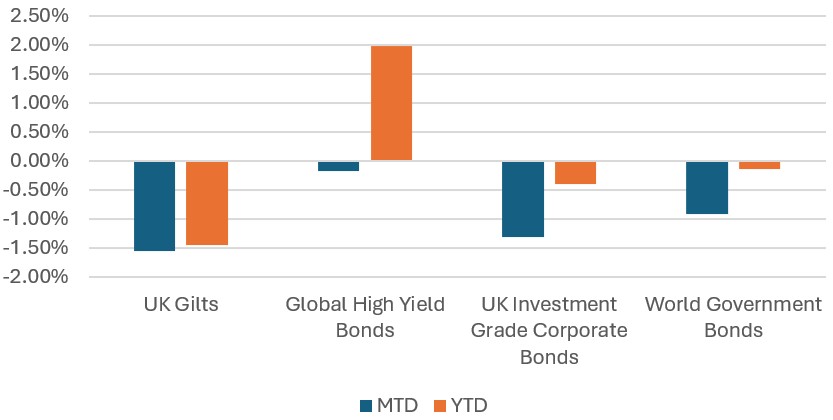
Figure 2: Fixed income returns (Source: Bloomberg, July 2026)
Commodities
Oil reversed June's sharp decline as hostilities between the US and Iran re-escalated through July, with Brent crude climbing back toward $90 a barrel, a reversal that amplified the inflation concerns that had been eased by the mid-June ceasefire. The re-pricing of energy risk fed directly into bond markets, contributing to the long-end yield spike.
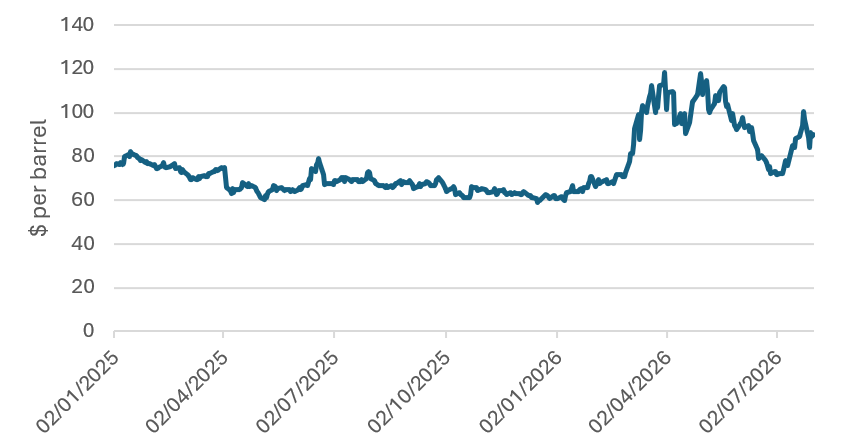
Figure 3: Brent Crude Oil price one-year changes (Source: Bloomberg, July 2026)
Summary
July revealed that investors are growing more anxious about the assumptions that drove the recent AI stock boom. Fears regarding the massive cost, funding sources, and actual profits of AI tech echoed across both stock and bond markets. This anxiety exposed risky, overcrowded bets and forced some major investors to panic-sell.
Added to this, rising energy prices brought back fears of inflation. At the same time, the Federal Reserve refused to give hints about its future plans while doubling down on its 2% inflation goal - even though they left interest rates unchanged. This combination unsettled investors and pushed longer-term interest rates sharply higher.
Even with this drama, corporate profits remained solid and economic growth stayed strong. Ultimately, the month forced a conscious reset on how investors price risk, creating a clear split between different industries and pushing investors back toward safe, steady companies with reliable cash flow. Our portfolios are consciously diversified to thrive in these circumstances; downside risk is controlled as more traditional sector exposure in our portfolios pick up the slack when more fashionable sectors struggle!
If you have any questions about your own portfolio or more general concerns in this period of heightened uncertainty, do contact your Adviser or contact us centrally through our website.
Arrange your free initial consultation
Watch a summary of market activity in July
Download: World Markets At A Glance July 2026
The information in this article is correct as at 13/08/2026.
This market update is for general information only, does not constitute individual advice and should not be used to inform financial decisions.
Investment returns are not guaranteed, and you may get back less than originally invested; past performance is not a guide to future returns.