 Skip to main content
UK Inflation jumps to 3.3% as fuel prices surge

The rate of inflation in the UK has risen to 3.3% in March 2026, up from 3% in February, according to figures released from the Office for National Statistics (ONS).
The ONS collected their data for this month’s inflation figure in the middle of March, meaning that these figures reflect the first few weeks of the Middle East conflict. They offer an early snapshot of the trend we might expect in the coming months as the economic impact of the war begins to be reflected in real terms.
Prior to the conflict, expectations were that the Bank of England would begin cutting UK base rates over the course of the year. However, concerns around rising inflation have led to suggestions that rates could remain unchanged, or potentially be pushed higher.
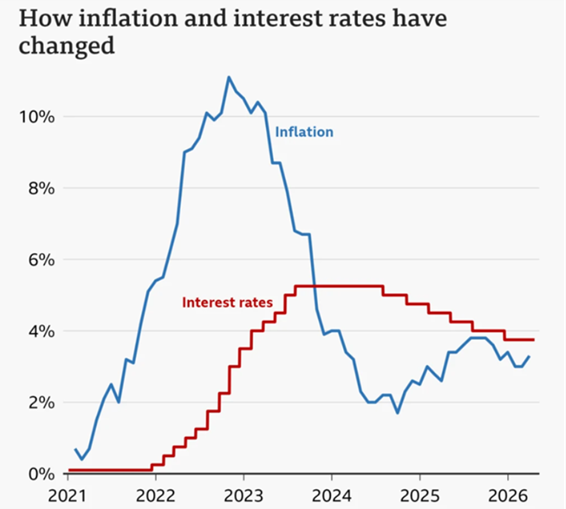
Source: ONS, Bank of England - 2026.
The Monetary Policy Committee (MPC) are due to meet next week to decide whether to increase the current rate of inflation, which currently sits at 3.75%.
What is driving the inflation increase?
At least in part as a knock-on impact from the conflict in the Middle East, many prices have seen noticeable increases.
Fuel costs jumped sharply, climbing 8.7% compared to the previous month. This marks the steepest monthly rise since June 2022, which was the period following Russia’s invasion of Ukraine.
Looking at the annual picture, prices were up 4.9% in the year to March, representing the fastest rate of increase since January 2023.
For food the rates were lower, coming in at 3.7%. It can often take about a year for food supply cost changes to truly be reflected in food prices in the UK, so expect your shopping bill to continue to creep up in the coming months.
What is inflation and how is it measured?
Inflation is a measure of how the prices of goods and services have increased over time. Goods are tangible items sold to customers, such as food, while services are tasks performed for the benefit of recipients, such as a haircut. Generally, this increase is measured by considering the cost of things today compared to how much they cost a year ago. The average increase between these prices is demonstrated in the inflation rate.
Rising interest rates directly affects the cost of living. For example, if the price of a bottle of milk is £1, and inflation is increasing by 5%, then your bottle of milk will cost you 5p more. Or, in other words, the spending power of your money has decreased by 5%.
Ideally, the Government wants to keep inflation low and stable. The general mandated target for the Bank of England is 2%.
Anything significantly above or below this target is thought to cause issues for the economy.
The cost of living surged in recent years, with inflation peaking at 11% in 2022 - way above the Bank of England's 2% target, partly due to the increase in energy prices following Russia's invasion of Ukraine.
While the rate has dropped, falling inflation does not mean the goods and services are coming down in price overall, it is just that they are rising at a slower pace.
Our chartered financial advisers are expert and unbiased, meaning that they can give whole of market advice, and so are best placed to give you a plan tailored exactly to your personal financial goals.
If you’d like to know more, request a free non-committal initial consultation with one of our team or give us a call on 0333 323 9065 and get in touch.
Arrange your free initial consultation
This article is for information only and does not constitute individual advice.