Skip to main content
UK Tax Planning for high income earners
After years of frozen thresholds, reduced personal allowances and fiscal drag, tax planning for high earners has become increasingly important. The Autumn Budget 2025 and Spring Statement 2026 added further pressure, particularly for those with larger pension pots, higher value homes, investment income or estates already close to inheritance tax allowances.
A ‘high earner’ in terms of tax used to be reserved only for someone earning a very large salary, but now someone earning over £50,270 can fall into higher rate tax bands, while those earning more than £100,000 can lose their personal allowance entirely. The £12,570 tax-free Personal Allowance reduces (tapers) by £1 for every £2 you earn over £100,000. By the time your adjusted net income reaches £125,140, your allowance drops to zero.
For people with significant assets, the challenge is wider than income tax alone. Pensions, property, investments and inheritance tax all need to be considered together.
Arrange your free initial consultation
Tax can have a big impact on your ability to preserve and grow your savings and investments in retirement. As such, one of the main focuses when advising clients, is creating a plan that helps them achieve their objectives in the most tax-efficient manner. There are several ways to reduce the tax you pay on your annual income, especially if you’re in the higher or additional rate tax bracket.
What are the main taxes?
Income tax
Income tax is a tax imposed directly on your personal income. In simple terms, it is paid at rates between 0% and 45% dependent on which of the income tax brackets you fall into.
Once your earnings exceed your personal allowance, you are required to pay tax on the following sources of income:
- Income from employment
- Income from pension
- *Interest on savings
- Property rental income
- Employment benefits
- Income from a trust
*Interest would only be taxable above the personal allowance, the starting rate and personal savings allowance.
As of the 2026/27 tax year:
- The personal allowance remains at £12,570
- Basic rate tax (20%) applies to income from £12,571 to £50,270
- Higher rate tax (40%) applies from £50,271 to £125,140
- Additional rate tax (45%) applies from £125,141+
These thresholds are now frozen until 5 April 2031, further extending the impact of fiscal drag.
Dividend Tax
The dividend allowance remains £500, but dividends above this are taxed at 10.75% for basic rate taxpayers, 35.75% for higher rate taxpayers and 39.35% for additional rate taxpayers. From April 2027, tax on savings interest and property income is also due to rise by two percentage points.
If you are a Scottish taxpayer, income tax bands differ from the rest of the UK, so regional rules should be factored into your planning.
Capital Gains Tax
Capital Gains Tax (CGT) is paid on the profit made when you dispose of certain assets, such as shares, second homes, or other investments held outside of a tax-efficient wrapper.
For 2026/27, the CGT annual exemption remains £3,000, much lower than £12,300 in 2022/23. Gains above the allowance are generally taxed at 18% for basic rate taxpayers and 24% for higher and additional rate taxpayers, depending on how the gain falls across your tax bands.
Inheritance Tax
Inheritance Tax (IHT) is a tax on the value of an estate upon death or on certain gifts made during your lifetime.
- The nil-rate band remains at £325,000
- *The residence nil-rate band offers an additional £175,000 if passing a home to direct descendants
- The standard rate of IHT is 40%, or 36% if at least 10% of the net estate is left to charity
*To qualify for the Residence Nil Rate Band (RNRB), an estate must pass a residential property (or equivalent assets if downsized) to direct descendants. The deceased must have lived in the home at some point, and the net value of their total estate must be under £2 million.
From 6 April 2027, most unused pension funds and pension death benefits will be brought into a person’s estate for IHT purposes. This is one of the biggest upcoming changes for high earners, as pensions have often been used as an efficient way to pass wealth to the next generation.
Options to consider may include reviewing beneficiary nominations, drawing pension income differently, lifetime gifting, life insurance cover, charitable giving, trust planning where suitable, and using other assets before pensions. The right approach will depend on income needs, tax position, health, age, family circumstances and estate value.
High value property is also becoming a bigger issue. The proposed mansion tax, formally expected to be a High Value Council Tax Surcharge, is due to apply from April 2028 to homes in England valued above £2 million. For high earners with substantial property wealth, this could add an annual cost and may influence gifting decisions, estate planning and whether it remains practical to retain a family home.
How to reduce taxable income as a high earner
Reducing your taxable income can be one of the most effective ways to lower your overall tax bill. For high earners, this might mean utilising pension contributions, salary sacrifice, or charitable giving to stay within lower tax bands or reclaim lost allowances.
Reducing adjusted net income below £100,000 can help restore some or all of the personal allowance. Keeping income below £80,000 may reduce or remove the High Income Child Benefit Charge, while keeping income below £50,270 may help avoid higher rate tax.
Why is tax planning important?
Tax planning involves minimising tax liabilities by utilising allowances, exemptions, and tax reducers to lower the tax you pay, so it should be an essential part of an individual’s financial plan.
For high earners, planning is particularly important because several thresholds interact. These include the personal allowance taper above £100,000, the High Income Child Benefit Charge above £60,000, the tapered pension annual allowance for the highest earners, the £2 million IHT residence nil rate band taper and the future inclusion of pensions in estates from April 2027.
What is higher rate tax?
For 2026/27, higher rate tax begins with earnings between £50,271 and £125,140, which are taxed at 40%. Those earning above £125,140 are taxed at 45%. Because thresholds are frozen until 2031, more people are likely to pay 40% or 45% tax even if their real spending power has not improved.
Those earning less than £50,270 and more than £12,571 will pay the basic rate of tax at 20%. Most people do not pay income tax on the first £12,570 they earn because this falls within the personal allowance. Income above this is then taxed in bands.
High earners cutting pay: should you consider it?
Some high earners are now deliberately cutting their pay or exchanging salary for pension contributions or other benefits as a strategic way to reduce tax liability. This is often done through salary sacrifice or personal pension contributions, which can lower your taxable income, increase pension savings, and in some cases reclaim lost allowances such as the personal allowance or avoid additional tax charges like the High-Income Child Benefit Charge.
Salary sacrifice is especially valuable for high earners because it can provide both income tax and National Insurance savings. It may also allow an employer to pass on some or all of its own National Insurance saving into the pension. For those affected by the personal allowance taper, it can be particularly powerful because reducing adjusted net income can improve the effective rate of relief.
However, this benefit is changing. From April 2029, the National Insurance exemption for employee pension contributions made through salary sacrifice will be capped at £2,000 a year. Contributions above that level can still be made, but the National Insurance advantage will be reduced. This is likely to affect high earners most because they are more likely to sacrifice larger sums into pensions.
Ways to reduce your income tax bill
There are a few ways in which you can reduce your income tax bill. Broadly, they are as follows:
Contribute to your pension
Pension contributions remain one of the most effective tax planning tools for high earners. Contributions usually receive basic rate relief automatically, with higher and additional rate relief claimed through self assessment where appropriate.
The pension annual allowance remains £60,000 for 2026/27, although it can be tapered for the highest earners. ‘Carry forward’ may allow unused annual allowance from the previous three tax years to be used, provided the rules are met and the individual has enough relevant UK earnings.
For those earning between £100,000 and £125,140, pension contributions can be especially valuable. This is because the personal allowance is reduced by £1 for every £2 of income above £100,000, creating an effective marginal tax rate of up to 60%. A pension contribution can reduce adjusted net income and potentially restore some or all of that allowance.
Contribute to your pension via salary sacrifice
You can ask your employer to enter into a salary sacrifice contribution arrangement to your pension, which will reduce the amount of money subjected to the highest rate of income tax (or various rates depending on the tax bands the income falls into after the sacrifice), along with also providing valuable National Insurance savings. This can become quite complicated, and more details can be found on the government website.
A notable additional benefit of salary sacrifice arrangements is that depending on your employer, they may pay the National Insurance Contributions savings they make from the forgone salary into your pension.
Do take care though as the government is planning to make changes to how salary sacrifice for pension contributions work from April 2029 by capping the National Insurance (NI) exemption to £2,000 per year.
Make full use of your ISA annual allowance
ISAs remain a valuable way to shelter income and growth from tax. The overall ISA allowance remains £20,000 for 2026/27. From April 2027, the Cash ISA limit for those under 65 is due to fall to £12,000, although the overall ISA allowance is expected to remain £20,000.
Up to 60% tax relief available when you invest in a pension
Investing in your pension pot is an attractive option to increase your savings in a tax efficient way. We actively encourage clients, when suitable, to contribute regular amounts to their pension to not only build up their pension pot but also to benefit from tax efficiencies.
For those earning between £100,000 and £125,140 you could be in the 60% tax trap. But this also presents an opportunity when it comes to saving for retirement. If you have taxable income in this range, you can effectively receive income tax relief of 60% on your pension contributions as this is the marginal rate of tax paid on earnings within this band. This is due to the impact of your personal tax allowance of £12,570 being reduced by £1 for every £2 you earn over £100,000 meaning the allowance is reduced to zero when your income reaches £125,140. A pension contribution within this band of earnings effectively reclaims part, or all, of your personal allowance thus increasing the rate of tax relief to 60%.
How to avoid the High Income Child Benefit Charge
For 2026/27, the High Income Child Benefit Charge applies where the higher earning partner has adjusted net income above £60,000. The charge removes 1% of Child Benefit for every £200 of income above that level, with the full amount effectively lost once income reaches £80,000. Pension contributions and Gift Aid donations can reduce adjusted net income, which may reduce or remove the charge.
The benefits of charitable giving
Giving to charity can reduce income tax and, in some cases, inheritance tax. Through Gift Aid, a charity can claim an extra 25p for every £1 donated by a UK taxpayer. Higher and additional rate taxpayers can then claim further relief through self assessment.
Charitable giving can also reduce IHT if at least 10% of the net estate is left to charity, as this can reduce the IHT rate from 40% to 36%.
Tax relief schemes and other allowances
Venture Capital Trusts (VCT), Enterprise Investment Scheme (EIS) and Seed Enterprise Investment Scheme (SEIS) investments can offer valuable income tax relief, although they carry higher risk and are not suitable for everyone. For 2026/27, EIS relief remains 30% and SEIS relief remains 50%, while VCT income tax relief has reduced from 30% to 20% from 6 April 2026.
These investments can appeal to high earners who have already used pensions and ISAs, but they should only be considered as part of a diversified plan and with appropriate advice.
Don’t invest unless you are prepared to lose all the money you invest. This is a high risk investment and you are unlikely to be protected if something goes wrong.
But, as higher risk investments they are not suitable for all investors. There is a chance that all of your capital could be at risk and you should not invest into these types of plans without seeking expert advice from a reputable firm of independent advisers such as The Private Office.
|
Don’t invest unless you’re prepared to lose all the money you invest. This is a high-risk investment and you are unlikely to be protected if something goes wrong. |
|---|
How we can help
If you would like to find out more about how The Private Office can help with personalised tax efficient financial planning, please enquire for a free initial consultation with one of our Independent Financial Advisers.
Arrange your free initial consultation
The information contained within this article is based on our understanding of legislation, whether proposed or in force, and market practice at the time of writing. Levels, bases and reliefs from taxation may be subject to change.
The content in this article is for information only and does not constitute individual financial advice.
The value of your investments can go down as well as up, so you could get back less than you invested.
A pension is a long-term investment not normally accessible until age 55 (57 from April 2028 unless the plan has a protected pension age). The value of your investments (and any income from them) can go down as well as up which would have an impact on the level of pension benefits available.
Your eventual income may depend on the size of the fund at retirement, future interest rates and tax legislation.
The Financial Conduct Authority (FCA) does not regulate estate planning or tax advice.
VCTs are high risk investments and there may be no market for the shares should you wish to dispose of them. You may lose your capital.

How to unlock more tax-free cash from your pension
As the landscape of pensions continues to evolve, understanding the nuances of regulatory changes is paramount for maximising tax efficiency and optimising your financial plans.
One recent development is the introduction of Transitional Tax-Free Amount Certificates, which offer a bespoke approach to deductions from the Lump Sum Allowance and Lump Sum and Death Benefit Allowance.
Arrange your free initial consultation
But if this all sounds like jargon and hard to wrap your head around, lets us better explain as we delve into the intricacies of these certificates, examining eligibility criteria, potential benefits, and potential drawbacks. Our primary focus will be on illustrating how these certificates can potentially benefit Defined Benefit pension holders (also known as a final salary scheme, but also include public sector schemes for example, Career Average Revalued Earnings or CARE) through a detailed calculation demonstrating the potential impact on their tax-free cash entitlement at retirement.
What are Transitional Tax-Free Amount Certificates?
Transitional tax-free amount certificates serve as tools to accurately reflect tax-free lump sums received before April 6, 2024, within the new pension framework. They are issued by registered pension schemes, allowing members to increase the level of tax-free cash available to them.
The Lump Sum Allowance sets the tax-free lump sum a pension holder can withdraw from their pension pot during their lifetime. This is currently standardised at £268,275; however, this can vary depending on individual protections. Pension Protections were introduced to protect pension savings from previous reductions in the Standard Lifetime Allowance.
The lump sum and death benefit allowance governs the tax-free lump sum payments beneficiaries can take following the pension holders passing and is currently set at £1,073,100. However, this may be reduced by tax free lump sums already taken by the member.
For individuals who accessed their benefits post-April 5, 2024, a standard transitional calculation is used to ensure adjustments are made to the lump sum allowance and lump sum and death benefit allowance. In most cases this standard calculation effectively reflects past benefits utilised and aligns correctly with the new regulatory framework. However, in certain circumstances, some individuals may qualify for a higher allowance by applying for a transitional tax-free amount certificate.
For Defined Benefit Pension Scheme members, two such circumstances are as follows:
- Members of Defined Benefit Pension Scheme where they opted to take a full scheme pension and did not receive a tax-free lump sum.
- Members of a Defined Benefit Pension Scheme who received a tax-free lump sum which was less than 25% of the pension’s value for lifetime allowance purposes (calculated as 20x the pension, plus any tax-free lump sum).
In these circumstances transitional tax-free amount certificates may offer a bespoke adjustment to the lump sum allowance and lump sum and death benefit allowance, ensuring a more accurate representation of the individuals tax-free lump sum entitlement. By accounting for actual lump sum benefits received, before the regulatory shift, transitional tax-free amount certificates provide a tailored approach that may prove advantageous for some pension holders.
Impact for Defined Benefit Pension Holders:
Here we will provide an example situation to further clarify how transitional tax-free amount certificates could provide a benefit to an individual who has taken tax-free cash under the 25% from their Defined Benefit Scheme.
Scenario:
Tom decided to begin drawing income from his Defined Benefit Pension t in 2020/2021. He took pension income of £27,500 per annum and chose to take tax free cash of £50,000.
If we assume Tom has Fixed Protection 2012 (giving him a Lifetime Allowance of £1,800,000) taking these benefits used up 33.33% of his Lifetime Allowance (£27,500 x 20, plus £50,000 = £600,000 which is 33.33% of £1,800,000).
| Without a transitional tax-free amount certificate | With a transitional tax-free amount certificate |
|---|---|
The standard calculation deducts 25% of 33.33% of £1,800,000 = £149,985 from his Lump Sum Allowance (LSA) and Lump Sum and Death Benefit Allowance (LSDBA) to give allowances available to use from 6 April 2024 of:LSA = £450,000 - £149,985 = £300,015
|
As £50,000 of tax-free cash was taken, £50,000 is deducted from the Lump Sum Allowance (LSA) and Lump Sum and Death Benefit Allowance (LSDBA) so the allowances available to use from 6 April 2024 are:LSA = £450,000 - £50,000 = £400,000
|
As this example explores, if you have not taken your full tax-free cash entitlement, you could be entitled to a larger lump sum allowance and lump sum and death benefit allowance by applying for a transitional tax-free amount certificate. This could allow you to take more tax-free cash from any other pension schemes you may hold and the implications of this could be significant. In this example, c. £100,000 of additional tax-free cash could be available to the individual, though please note this is still based on 25% of the value of any pension funds from which tax free cash has not yet been taken (for defined contribution pensions). Therefore a £400,000+ pension pot would be required to take full advantage of the additional tax free cash which is now available.
How to apply for transitional tax-free amount certificates:
Eligible individuals must submit a transitional tax-free amount certificates application to the pension scheme before taking any tax-free cash post-April 5, 2024. The success of a transitional tax-free amount certificates application hinges on the provision of complete and accurate evidence verifying the individual's entitlement to a reduced deduction from lump sum allowance and lump sum and death benefit allowance. Applicants must thoroughly compile documentation demonstrating their actual tax-free lump sum entitlements before April 6, 2024, ensuring compliance with regulatory requirements.
Potential pitfalls of applying for transitional tax-free amount certificates
While transitional tax-free amount certificates offer tailored adjustments to allowances, individuals must carefully evaluate the potential impacts on their pension benefits. Notably, calculations can vary significantly from individual to individual. For example, not everyone who took less than their 25% tax-free cash will benefit from applying for transitional tax-free amount certificates. In some cases, the issuance of a certificate may result in a reduction of allowances. If the outcome proves to be unfavourable creating less tax-free cash entitlement after applying for the certificate, this decision cannot be reversed.
How we can help
In this article we delved into the potential benefits offered to individuals with Defined Benefit pensions by the new Transitional Tax-Free Amount Certificates. If you believe this could be advantageous to you, it is important to seek financial advice before proceeding further. The possibility of this decision weakening your future pension position underlines the need for a comprehensive analysis of your previous benefits taken across your pension schemes.
At The Private Office we offer the guidance required to navigate these complex changes to pension legislation, ensuring that you are positioned optimally for your future and that you maximise the tax efficiency of the benefits you are entitled to. We can provide tailored financial advice to aid you in establishing the impact of transitional tax-free amount certificates on your specific situation, and we can assist you by preparing your application for potential submissions to your pension scheme providers, should these prove advantageous.
If you would like to schedule a call with one of our advisers, please get in touch. We can arrange an initial meeting at no cost and with no obligation, to further explore your own personal situation together.
Arrange your free initial consultation
This article is intended for general information only, it does not constitute individual advice and should not be used to inform financial decisions.
The Financial Conduct Authority (FCA) does not regulate tax advice.
A pension is a long-term investment. The value of an investment and the income from it could go down as well as up. The return at the end of the investment period is not guaranteed and you may get back less than you originally invested.
The information in this article is based on current laws and regulations which are subject to change as at future legislations.

Have you fallen victim to the 60% ‘tax trap’?
The 60% tax trap is becoming an issue for a growing number of higher earners. It affects people whose income moves above £100,000 (which is why it’s also known as the £100k tax trap), often because of a pay rise, bonus, investment income, rental income or a combination of these. At this level, the personal allowance starts to taper away, which can create an effective tax rate of up to 60%.
With a Labour government in power since July 2024, it's clear now that the UK's financial landscape is constantly under review, with a particular focus on the taxation of high earners. While the freeze on income tax thresholds and allowances, was a policy previously set out by the Conservative government, Labour confirmed it would remain in place until at least April 2031, as they face ongoing pressure to address the impact of this fiscal drag. Each year sees more and more Britons pulled into higher tax bands and sadly, this is set to continue for many years to come.
For many professionals earning over £100,000, the assumption is that the top rate of tax is 45%. However, a feature of the UK tax system means some individuals are subject to an effective income tax rate of up to 60% on a portion of their income, plus a further 2% once National Insurance is included.
What’s more, a change announced in the Autumn Budget 2025 is set to reduce the effectiveness of one of the main strategies used to mitigate it: salary sacrifice. But more on that later.
Arrange your free initial consultation
What is the 60% tax trap?
The 60% tax trap refers to the income band falling between £100,000 and £125,140 on which the employed or self-employed will effectively experience an income tax rate of 60%. Once national insurance contributions of 2% are included, the effective rate can reach 62%.
This is because for every £2 you earn over £100,000 per annum, you lose £1 worth of your £12,570 tax-free personal allowance.
Your tax rate only reverts to the additional rate of 45% after the entirety of your personal allowance for that year has been eroded, i.e. on income above £125,140.
Let’s bring this to life with an example of how the tax trap works. If we assume an individual has earnings of £100,000 for the year, and they receive a bonus of £20,000.
This is why the 100k tax trap can feel counterintuitive. A pay rise, bonus or additional source of income may leave you with far less than expected once the loss of the personal allowance has been taken into account.
From this bonus, £8,000 is immediately lost to standard 40% higher rate tax. The double jeopardy here is the reduction in the personal allowance, which is reduced from the full entitlement of £12,570 to £2,570. This reduction of £10,000 means there is an additional £10,000 of income that sits within the higher rate tax bracket and is subject to 40% income tax. This is equivalent to a further £4,000 of income tax payable.
And then finally, there is the national insurance contribution payable on the bonus, which is at 2% above the higher rate tax threshold of £50,270, equating to £400 in this example.
The result is an effective tax rate of 62% with the individual taking home £7,600 of their £20,000 bonus.
According to new HMRC forecasts, more than 2 million people will fall into this £100,000 tax trap in the 2026/27 tax year, which is the highest number on record. In fact, the number of people earning more than £100,000 has nearly doubled in the last five years.
This is no longer a niche issue affecting only the highest earners. Threshold freezes, wage growth, bonuses and investment income mean more professionals, business owners and senior employees are being pulled into the 100k tax trap without necessarily feeling significantly wealthier.
How can I mitigate the 60% tax trap?
Now you might be thinking, how can I avoid falling into the 60% tax trap? One of the main levers you can pull to help reduce your tax liability, and help you to avoid this trap, is increasing your pension contributions, as this reduces your ‘adjusted net income’.
Adjusted net income matters because it is the figure HMRC uses to assess whether your personal allowance should be reduced. It can also affect wider entitlements and allowances, which means the consequences of crossing £100,000 can go beyond income tax alone.
Pension Contributions
By making pension contributions you can reduce your effective income and keep your ‘adjusted net income’ below £100,000, allowing you to preserve your personal allowance of £12,570.
There are two main ways to contribute to your pension as an employee: salary sacrifice and personal contributions. While both can reduce your taxable income, they work in different ways.
Salary sacrifice is an arrangement where you agree to give up part of your salary or bonus, which your employer then contributes directly into your pension on your behalf. This means the amount is taken from your gross pay before tax and national insurance are deducted, offering maximum tax efficiency. You can benefit from income tax relief of up to 60% plus an NI saving of 2% when using this method in the tax trap income band.
Alternatively, you can make personal contributions from your net income. These still attract tax relief, 20% is added to your pension automatically by HMRC, and you can claim back a further 20% if you are a higher rate taxpayer or 25% as an additional rate taxpayer.
What the proposed change to the salary sacrifice rules does mean that for contributions above the £2,000 per year threshold, there is limited difference (from a tax relief standpoint) between those made via salary sacrifice and those made personally. With that being said, one benefit of pension contributions via salary sacrifice is the tax relief is received immediately given contributions are taken off from gross income, therefore reducing your tax liability payable through PAYE. On the other hand, personal contributions may require tax relief to be reclaimed if you are a higher or additional rate taxpayer.
Depending on your income for the tax year and the level of any employer contributions being made, you may be able to pay up to £60,000 into your pension and still receive tax relief on your contributions. You can sometimes make additional contributions into your pension if you have unused annual allowance from previous tax years.
Labour’s current stance means these pension strategies remain as relevant as ever for higher earners, with no announced changes to pension tax reliefs despite wider increases in the tax burden elsewhere.
It is also important to remember that, despite changes on the horizon, pensions continue to offer one of the most generous forms of tax relief available. Contributing to your pension not only reduces your tax bill but also builds long-term financial security.
But changes to salary sacrifice from 2029 were announced in the Autumn Budget 2025. In this Budget, the government confirmed that from April 2029, a cap will be introduced on the National Insurance savings available through salary sacrifice pension contributions.
Under the new rules, only the first £2,000 of salary sacrificed into a pension each year will be exempt from employee and employer National Insurance. Contributions above this limit will still reduce your income tax liability, but they won’t generate NI savings as they do today.
This change doesn’t affect pension income tax relief itself, which remains in place. However, it will reduce the overall efficiency of using salary sacrifice to bring your income below the £100,000 threshold, particularly for those contributing significant amounts.
For contributions above the proposed £2,000 limit, the impact on employees above the higher rate tax threshold is broadly a 2% reduction in the overall tax efficiency of pension contributions. The impact is more stark for employers, who see a ‘hit’ of 15% on the cost of employee pension contributions above the £2,000 threshold. This puts an increasing strain on the total ‘cost’ of employees, following the increase in the employer NI contribution rate from 13.8% to 15% in April 2025.
Charitable donations
There are other options to reduce your income to avoid falling into the 100k tax trap. Charitable donations, similar to pension contributions, decrease your ‘adjusted net income’ and can allow you to reclaim some or all of your personal allowance.
Gift Aid can be particularly useful for higher earners who already give to charity. When a donation is made under Gift Aid, the charity can claim basic rate tax relief and you may be able to claim additional relief through self assessment. The gross value of the donation can also reduce your adjusted net income, which may help preserve your personal allowance if your income is close to or above £100,000.
Childcare and family benefits
For families, the 100k tax trap can have a further sting. Once adjusted net income exceeds £100,000, eligibility for certain childcare support can be lost. This can include Tax Free Childcare and funded childcare hours, depending on your circumstances and where you live in the UK.
This means that a parent moving just above £100,000 may face the loss of personal allowance as well as the loss of childcare support. For some families, this can make the effective cost of earning more significantly higher than the headline tax rate suggests. Pension contributions and Gift Aid donations can sometimes help bring adjusted net income back below the threshold, but the rules are detailed and planning should be done carefully.
Other income lowering tactics to consider
Pensions and charitable giving are often the most common planning tools, but they are not the only areas to review. If you have control over the timing of bonuses, dividends or business income, it may be worth considering whether income can be spread across tax years. Business owners may also want to review the balance between salary, dividends and employer pension contributions.
Investment income can also push people into the 100k tax trap. Interest, dividends and rental income can all count towards adjusted net income. Using ISAs, reviewing how investments are held between spouses or civil partners, and making sure allowances are used efficiently can all help reduce unnecessary tax leakage over time.
These decisions should not be made for tax reasons alone. Cash flow, pension annual allowance limits, investment risk, access to money and wider family goals all need to be considered before making changes.
How we can help with the 100k tax trap
Controlling your income to reduce your tax bill can be complex and time-consuming, but by engaging the help of a financial adviser we can advise and assist you on the best approach to suit your own personal situation and circumstances.
Please do get in touch if you have any concerns that you might be affected by this tax trap, or if you had any queries on general pension and financial planning as a whole. We’re offering anyone with £100,000 or more in pensions, investments or savings a free cash flow review worth £500.
Arrange your free initial consultation
This article is intended for general information only, it does not constitute individual advice and should not be used to inform financial decisions.
A pension is a long-term investment not normally accessible until age 55 (57 from April 2028 unless the plan has a protected pension age). The value of your investments (and any income from them) can go down as well as up which would have an impact on the level of pension benefits available.
The Financial Conduct Authority (FCA) does not regulate cash flow planning, estate planning or tax advice.
How to plan your finances in an election year
The Rest is Elections
The British electoral system does not lend itself to coalition governments. Ask anyone from the Liberal Democrats how they feel about the Conservative/Lib Dem coalition of 2010 and they probably won’t refer to it in glowing terms. Historically, this means that the UK is subject, every now and then, to a lurch from right to left, or vice versa. With this lurch we tend to see fairly fundamental changes in policy. At least, we used to.
I don’t think I am being controversial by suggesting there is a strong possibility that Kier Starmer will be the next Prime Minister at some point this year. The last time we had a change from Conservative to Labour was Tony Blair’s victory, 27 years ago, in 1997, with a majority of 179. According to a recent poll, Labour is heading for a majority of 298! We’ll see. But already, many of our clients are thinking about what a Labour Government will mean for them and what, if anything, should they be doing to protect their finances.
Arrange your free initial consultation
For Financial Advisers, we are always in a difficult position when it comes to offering advice on an unknown. At the time of writing, the Labour manifesto has yet to be written and we are short of precise detail. Without a crystal ball it would be unwise for us, or any other adviser, to recommend a course of action based on speculation.
To a certain extent, we experience the same thing every year with the budget. I have been advising clients for over 35 years and every year I hear the same fears. Are we going to see the end of tax-free cash in pensions? Will higher rate tax relief on contributions be removed? Will any changes be retrospective? They are, in essence, the same fears as those before an election.
Will Labour tax the rich and give to the poor?
Labour, in blunt terms, has always been associated with taxing the rich and redistributing to the poor. The Labour administration of the 70s imposed an eye-watering top rate of income tax at 83% for those with incomes above £20,000 (£221,741 in today’s terms). With the investment income surcharge of 15% added, this resulted in the now famously high-water mark of 98%, the highest rate since the war.
I think it is worth pointing out that politics from the 70s was far more polarised than it is today. Tony Benn was openly attempting to nationalise virtually every British industry in sight, and the unions were hell bent on removing anyone from government who was more right wing than Che Guevara. If you haven’t done so already, I thoroughly recommend listening to the excellent ‘The Rest is History’ podcast ‘Britain in 1974’. Apart from highlighting this polarity, it is also a stark reminder of just how bad things had become.
Since the 90s the major parties have become (in historical terms at least) more centrist, and both Labour and Conservatives exhibit the same general desires when it comes to taxation and government debt. The current tax take (under the Tories) is the highest it has been since the war. The highest rate of income tax now is 45%, higher than it was under Labour in 2010. Admittedly, both parties have, in recent years, examined their political extremities (Corbyn for Labour and the Reform breakaway for the Conservatives) but the truth seems to be that monetarism has won the day and the days of ultra-high taxation and reckless borrowing seem to be history. At least for now.
How can you protect yourself?
So, returning to the steps our clients can take to protect their positions, in advance of the general election, I think it will probably focus on the peripheral subjects such as the Lifetime Allowance, or good savings fundamentals, which apply regardless of elections.
The Lifetime Allowance (LTA) has just been abolished, but as soon as its demise was announced, Labour publicly stated that they would reinstate it. But without knowing what shape this will take, it is impossible for us to advise. They could simply reinstate the previous level (£1,073,100). If this is the case, it may be in our clients’ interests to ‘crystallise’ their pensions above this figure beforehand. But what if they don’t? What if the LTA is increased to £1.8 million and tax-free cash is increased to 25% of this figure as a conciliatory gesture? In this case, you would be penalised by crystallising pensions now, up to this number. This is because there is now a new ‘Lump Sum Allowance’ (LSA) which is £268,275, and this represents the aggregate maximum amount of tax-free cash that can be taken from all schemes. There is also no guarantee that any change, whatever it might be, wouldn’t be retrospective.
So, what else might change? As I mentioned earlier, this is a question which also crops up every budget and the best protection anyone can take is probably to make the most of any tax breaks which are currently available.
First on the list is pensions. Obtaining tax relief on contributions is, and always has been, an extremely tax efficient move, especially for higher rate and, particularly, additional rate taxpayers. Not only do you receive tax relief on contributions (subject to annual allowance limits) but all pension funds grow free of capital gains tax and personal income tax. The pension fund is also outside of the estate for inheritance tax purposes.
ISAs are probably the next port of call with individuals permitted to invest up to £20,000 each tax year (plus a forthcoming British ISA allowing a further £5,000 each tax year). ISA funds are also free from capital gains tax and income tax which makes them superb retirement planning vehicles.
If a new government chooses not to change them then, well, they were a good idea anyway, and if they do change them (for the worse) then you have maximised tax efficiency beforehand (subject to there being no retrospective changes).
I think one thing is fairly certain. The UK is not in fine financial health and handouts will not be the order of the day. But like him or loathe him, Kier Starmer is no Tony Benn and, to quote Benjamin the donkey in Animal Farm, I suspect things will continue much the same as they did before. That is to say, badly!
Arrange your free initial consultation
This article is intended for general information only, it does not constitute individual advice and should not be used to inform financial decisions.
The opinions shared in this article are solely those of the individual and they do not necessarily reflect those of The Private Office.
Financial Conduct Authority does not regulate tax planning.
A pension is a long-term investment. The value of an investment and the income from it could go down as well as up. The return at the end of the investment period is not guaranteed and you may get back less than you originally invested.
The information in this article is based on current laws and regulations which are subject to change as at future legislations.

The big pension changes in 2024 and how to plan for them
2024 will see some huge changes to pensions, not least the much-publicised abolition of the Lifetime Allowance (LTA). So how do you prepare for a rapidly changing pension landscape? With a general election around the corner and the likelihood of a changing Government how can you plan for changes in legislation that could well be scrapped later down the line?
Arrange your free initial consultation
Lifetime Allowance
Taxation on pension funds has been a hot topic since the 2023 Spring Budget when the Chancellor announced his intention to abolish the ‘Lifetime Allowance (LTA)’. The LTA is the total value that someone can accrue within a pension over their lifetime without incurring certain tax charges. Under LTA rules you could face a tax charge of up to 55% on pension savings above £1,073,100. So, for people with large pension pots, the prospect of abolishing this allowance was welcomed.
The announcement also signposted the introduction of two new allowances which will restrict the amount of tax free lump sums which could be paid under the new pension regime from 6 April 2024.
The new Lump Sum Allowance is the upper limit on the tax-free cash someone can take from their pensions during their lifetime and is capped at 25% of the previous LTA (£268,275).
The second allowance, the Lump Sum and Death Benefit Allowance will restrict the tax free lump sum which can be paid from your pension funds to your beneficiaries if you die before your 75th birthday. The Lump Sum and Death Benefit Allowance is set at £1,073,100 and the new regulation does not have any provision for these to increase over time to keep pace with inflation.
If you had previously registered for one of the many forms of protection against the Lifetime Allowance and have not broken the conditions for maintaining your protection you will benefit from a higher Lump Sum and Lump Sum and Death Benefit Allowance.
To account for benefits taken between 6 April 2006 and 5 April 2024 a transitional calculation has been provided so that individuals can calculate their remaining available Lump Sum Allowance and Lump Sum and Death Benefit Allowance.
There is a secondary calculation which can be undertaken for individuals who did not receive the full tax free cash lump sum entitlement of 25% when pension benefits were taken previously which may enable them to receive an increased Lump Sum and Lump Sum and Death Benefit Allowance. It is advisable to take financial advice when undertaking these calculations as they can be complex.
As soon as the Chancellor announced the abolition of the LTA, Labour announced that they would reintroduce the LTA if they are elected following the impending General Election with the current Prime Minister, Rishi Sunak, suggesting this will happen in the second half of this year.
The number of people paying tax for breaching the LTA has been increasing in recent years (See Figure 1) , and the reintroduction of the limit after a period of overcontributing will push this number even higher. If the LTA is reintroduced at its previous level, it is estimated that around 250,000 people will be over the limit.
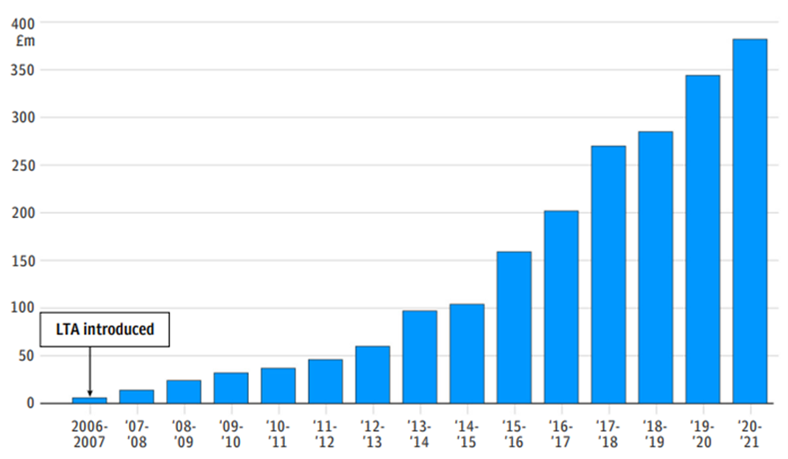
Figure 1: Tax Paid for breaching lifetime allowance, Source: HMRC, 2024
Many are concerned that bringing back the cap will push senior NHS doctors into an early retirement. One of the key motivations for scrapping the LTA initially was to deter NHS doctors from retiring early to avoid tax bills.
Could a Labour government reverse the rules?
In the run up to the election we could see a sudden flurry of savers rushing to draw down on their pensions before the potential reintroduction of an LTA. To prevent this, Labour may decide not to go ahead with the reversal.
Now that the legislation has been passed and HMRC have almost completed the implementation of the changes, tax experts have said it will be more difficult for policymakers to reverse the rules. This uncertainty leaves savers in a tricky position, as they try to second-guess the next move by a government.
So, do you make the most of the current pension rules or stay cautious in case Labour reverses the changes? In the past when the LTA has been changed HMRC has introduced protections for those who breached the new lower limit. Therefore, if the cap is reintroduced savers who are over the limit might be able to protect their pot. It is hard to predict how a new government might behave but many are hopeful for some form of protection.
If you are thinking about crystalising your pension early to avoid issues with a Lifetime Allowance tax charge, given the complexity of the matter, you should first consult your financial adviser.
Annual Allowance
It is also worth noting that the pension annual allowance changed from £40,000 to £60,000 on the 6th April 2023. Although there is not a limit on the amount that can be saved into pensions each year, there is a limit on the amount that can benefit from tax relief. The ‘Annual Allowance’ is the limit that an individual can contribute to a pension personally in any given tax year, whilst benefiting from tax relief.
For example, someone receiving a salary of £40,000, would only receive tax relief on personal contributions up to £40,000, but someone on a salary of £80,000, would only attract tax relief on contributions up to £60,000. It is important to note that lower limits apply to high earners or individuals who have already accessed some of their pension funds flexibly.
State Pension
The state pension is due to receive an 8.5% rise this month, taking it from £10,600 to £11,502 a year. This is the second largest percentage rise in the last 30 years. It is worth remembering that this isn’t the case for everyone who is entitled to the state pension, and there is no guarantee that the next government will retain the current “triple-lock” status afforded to the State Pension.
You can read more about specific pension details published in the Autumn Statement here.
Arrange your free initial consultation
This article is intended for general information only, it does not constitute individual advice and should not be used to inform financial decisions.
The information contained within this article is based on our understanding of legislation, whether proposed or in force, and market practice at the time of writing. Levels, bases and reliefs from taxation may be subject to change.

Simple ways to reduce your tax bill in 2024/25
The age old saying, ‘there are only two things certain in life, death and taxes.’ Well, although we may not always be able to control the former, the good news is we can have greater control on the amount of tax we pay to ensure we are being as tax efficient as possible. Regardless of your age, there are different ways in which you can reduce the amount of money you pay in tax . So, here is a useful refresher on simple ways in which you can save money on your tax bill in the new 2024/25 tax-year (commencing 6th April 2024 through to 5th April 2025).
Arrange your free initial consultation
Firstly, let's look at the taxes most commonly payable:
Income Tax
Income tax is the tax payable on any personal income we receive in a given tax year. This includes any interest received on savings deposits, as well as tax levied on salaries for employed people, or profits for the self-employed.
In England, Wales and Ireland, income tax is levied at 20%, 40% and 45% for basic, higher and additional rate taxpayers respectively. Different rates and tiers apply in Scotland, with 6 tiers of income tax bandings. Here, we will be specifically looking at England, Wales and Ireland.
There are various complexities relating to the personal allowance, however, broadly speaking, you have a personal allowance each tax year, currently £12,570 (frozen until April 2028). Up to this amount, earnings are tax-free. Surplus earnings above this amount are taxed at your marginal rate. It should also be noted that for every £2 you earn over £100,000, your personal allowance decreases by £1. Therefore, the personal allowance is zero if your income is £125,140 or above.
Relating specifically to cash deposits, there is a separate allowance called the personal savings allowance (PSA) which is £1,000 and £500 for basic and higher rate taxpayers respectively. This is used to offset against any interest accrued on our cash savings. Unfortunately, additional rate taxpayers are not entitled to this allowance.
Capital Gains Tax
Capital Gains tax (CGT) is the tax you pay upon the disposal of an asset that has increased in value. These might include the selling of stocks and shares, personal chattels and more. In the 2024/25 tax year, the annual exempt amount has been reduced from £6,000 to £3,000.
The Annual Exempt Amount is the amount you can use to offset against any CGT liability you may incur within that given tax year. Any CGT liability in excess of the annual exempt amount (£3,000), will be taxable at either 10% or 20% depending on if you are a basic rate or higher/additional rate taxpayer.
When disposing of property however, the associated tax is levied at 18% and 28% for basic and higher/additional rate taxpayers respectively. This is not applicable to your primary residence, but to additional properties such as a buy-to-let property of a second home.
Dividend Tax
When investing in stocks and shares of public companies, dividends are usually paid (which is a portion of the company profits distributed to shareholders) on a regular basis (monthly, quarterly, annually etc). There is a tax levied on dividends received - at the rate of 8.75%, 33.75% and 39.35% for basic, higher and additional rate taxpayers respectively.
Each tax year, similar to the annual exempt amount, you have a dividend allowance which is currently a measly £500. This can be offset against dividends received in the 2024/25 tax year, where any excess above the dividend allowance is taxed at their respective rates.
Maximising Tax-Efficiency
Now we have discussed taxes which many of us pay, lets discuss the various ways in which you can help prevent your hard-earned money from going to the tax man!
Utilising ISA Allowances
This is a commonly thought-of solution to investing in a tax-efficient manner. Let’s explore how it works:
- Each tax year you are able to invest an amount into an Individual Savings Account (ISA), currently £20,000. For children aged under 18, they have a Junior ISA (JISA) available to them which currently provides an allowance of £9,000 per tax year.
- Monies held within an ISA can be deposited in cash and/or invested in stocks and shares
- ISAs receive tax-free growth and income.
What does this mean for you?
It means each tax year; you have £20,000 to invest into an ISA. Upon disposal of assets within the ISA, there is no CGT liability generated which saves you money if you continue to utilise your ISA allowances over the long-term. This can avoid an unpleasant tax bill if your investments perform well and generate a capital gain. In addition, if you hold a Stocks and Shares ISA with regular receipt of dividends from the underlying companies, you do not need to worry about any form of dividend tax liability. With the dividend allowance being a measly £500, this could be a crucial difference between generating a sizable tax bill.
If you hold a cash ISA, it also means you do not need to pay income tax on the interest received on the deposit accounts you are holding within the ISA wrapper. Given the increase in savings rates in recent years, especially the high rates which are being offered on some fixed term accounts (see more at Savings Champion), it is considerably easy to accumulate interest in excess of your personal savings allowances than it would have been before rates started to climb.
Making additional Pension contributions
Each tax year, you can tax efficiently contribute into a registered pension scheme the maximum of either £3,600 (gross) or 100% of your relevant UK earnings, up to the annual allowance, currently £60,000 (gross), providing tax relief at your marginal rate. This means if you’re a 20%, 40% or 45% taxpayer, you may be able to claim tax relief, matching your personal tax band, on contributions made up to the annual allowance. There is also an opportunity for further pension contributions in excess of the annual allowance through a carry-forward rule. This allows up to a maximum of 3 previous tax year unused allowances to be used.
Please note: If you are a high earner, then your annual allowance may be subject to tapering. If you are unsure or believe you are in this position, you should speak to your adviser.
To encourage savings for retirement, the Government pays tax relief on the allowable contributions you make. This means that your pension provider can claim tax back from HMRC and add that amount to each contribution you make. Tax relief can be claimed through various ways such as the net pay arrangement, relief at source or salary sacrifice.
Pension savings are typically free to grow without generating any form of tax liability. Furthermore, when you begin drawing down on your pension, typically 25% of the pension pot will be paid tax-free, with the remaining amount being taxable at your marginal rate.
All the above-mentioned points mean that contributing into our pension can be extremely tax efficient.
For those who have relevant earnings above £100,000, there could be further benefit to contributing considerable amounts into your pension as you could be paying an effective rate of up to 60% income tax.
How does it work?
- As mentioned before, we all receive a personal allowance of £12,570. For earnings above £100,000, this personal allowance tapers by a rate of £2 per £1 over £100,000.
- This means you can earn £125,140 before completely losing any entitlement to the personal allowance.
- However, if you were to contribute into a pension, it reduces your taxable income and therefore, you can begin to reclaim your personal allowance.
Case Study example:
Sally, has relevant UK earnings of £120,000 and as a result, is a higher rate taxpayer. Due to her high salary, she only has a personal allowance of £2,570 (£20,000 earnings over £100,000. Therefore £20,000 / 2 = £10,000 of personal allowance lost. Personal allowance = £12,570 - £10,000 = £2,570).
Sally has decided it is affordable for her to make a gross pension contribution of £20,000 that tax year. As a result, not only has she successfully managed to reclaim her full personal allowance by lowering her taxable income. In doing so, Sally has also contributed to a tax efficient investment vehicle, obtained 40% tax relief from the government, all of which is able to grow tax free for her retirement provision.
As with all things, there comes a downside to specific strategies in saving tax. An example of this would be that you can only access your pension from age 55, increasing to 57 in 2028, as per the normal minimum pension age. There may be exceptions for those in critical illness or for the terminally ill. It is important to ensure affordability of pension contributions due to the inaccessibility of the investments. You should speak to a financial adviser when contemplating aspects of your retirement including affordability of a pension contribution.
Use it or lose it – Utilising all allowances in the household
As mentioned above, we have discussed the main types of tax which people might be liable to pay, including Capital Gains Tax, Dividend Allowance, Personal Allowance and the Personal Savings Allowance.
At the end of the tax year, these allowances will be reset, whether you have used them or not and most cannot be carried forward. As such, to help maximise tax efficiency, it is also worthwhile to consider the allowances available as a household and not just on an individual basis.
If you have utilised your current years allowances, there may be someone in your household who has not. In this instance, funding their contributions or allowances might be a useful way to spread the tax liability across multiple people to maximise tax efficiency.
Case Study example:
Rebecca, age 45, earns £185,000 per annum while her husband, David, earns £20,000. They have two children, James and Josh. Rebecca has currently utilised all her allowances in a tax-efficient manner as well as maximised her pension contributions for the current tax-year – however the remainder of her family have not. Rebecca holds some cash and some shares which are outside of her ISA and Pension. David has also contributed an affordable amount to his workplace pension arrangement to claim basic-rate tax relief.
Rebecca could:
- Gift some of the shares to her husband, David, if she believes that the gain on these assets is likely to generate a capital gain in excess of £3,000. Between them, they have £6,000 allowance to use.
- Minimise her cash holdings and maximise David’s cash holdings, as Rebecca does not have any personal savings allowance to offset against any interest earned as she is an additional rate taxpayer.
- Contribute £3,600 into each of her children’s pensions as well as £9,000 into their JISAs to utilise their current allowances.
- Contribute to David's pension on his behalf if affordable. Knowing how much is affordable should be done with the assistance of a financial adviser.
- Gift £20,000 to David for him to make an ISA contribution in the current tax year, if affordable.
The culmination of utilising your own allowances as well as your loved one's allowances, can be a great way for high earners to maximise their own tax efficiency as well as their families.
If this or anything you see in this article is something you would rather discuss with an adviser, please get in touch with us. We’re offering anyone with £100,000 or more in pensions, savings or investment a free initial review worth £500.
In our recent webinar: How to escape the tax raid on your Wealth, experts Christie Tillett and David Gruenstein talked about smart tax planning and how it has become essential to retain as much of your wealth as possible.
Watch it back here!
Arrange your free initial consultation
This article is intended for general information only, it does not constitute individual advice and should not be used to inform financial decisions.
Investment returns are not guaranteed, and you may get back less than you originally invested.
Tax rates and allowances mentioned in this article are based upon current limits and allowances, but are subject to change.
The Financial Conduct Authority (FCA) does not regulate cash flow planning or tax advice.
Savings Champion and their associated services are not regulated by the Financial Conduct Authority (FCA).
Navigating changes to UK tax 2024
The Chancellor, Jeremy Hunt, recently delivered his ‘Budget for Long-Term Growth on 7th March 2024, announcing the latest raft of tax changes to contend with, many of which will come into effect from 6th April 2024. This all follows huge pension change announcements last year and the continued effects of the stealth taxes hitting us all. Navigating all of these can be hard so here’s a look at some of the key changes that might affect you this coming new tax year.
Arrange your free initial consultation
National Insurance Changes
The national insurance rate for employees had previously been cut from 12% to 10%, with this change coming into effect on 6th January 2024. This is being further reduced by 2% to 8% from 6th April 2024, with both cuts applying to earnings between £12,570 and £50,270 per tax year.
The Treasury says the average worker on £35,400 per year will save more than £900 a year as a result of both of these cuts in January and April. This figure rises to over £1,500 for anyone who is employed and a higher rate taxpayer.
For the self-employed, the Government will reduce the main rate of Class 4 national insurance contributions from 9% to 6% from April 2024. This is an increase on the 1% cut that was previously announced at the 2023 Autumn Statement from 9% to 8%. Class 4 national insurance contributions apply to earnings between £12,570 and £50,270 per tax year. This could result in a potential saving of over £1,100 if you are self-employed with earnings over £50,270 per tax year.
The Government is also scrapping Class 2 national insurance contributions for the self-employed. Prior to 6th April 2024, you pay Class 2 national insurance contributions at £3.45 a week (£179.40 per year) if your self-employed profits are £12,570 or more for a tax year.
Abolition of the Lifetime Allowance, what does this mean?
The lifetime allowance, a limit on how much you can build up in pension benefits over your lifetime while still enjoying full tax benefits, is being scrapped from 6th April 2024. The lifetime allowance for the 2023/24 tax year is £1,073,100.
This removal of the lifetime allowance follows the removal of the lifetime allowance tax charge from 6th April 2023. Prior to 6th April 2023, any withdrawals above the lifetime allowance limit were subject to 55% if taken as a lump sum, or 25% plus your marginal rate of income tax if taken as income. From 6th April 2023 up to 5th April 2024, any excess over the lifetime allowance (whether taken as a lump sum or income) is subject to your marginal rate of income tax.
From 6th April 2024, the tax-free lump sum which can be taken from a pension pot (after the age of 55) will remain at 25% of the current lifetime allowance, equivalent to £268,275. This tax-free lump sum limit will be known as the Lump Sum Allowance (LSA). Any withdrawals above your LSA will be subject to your marginal rate of income tax.
Transitional protections may continue to apply, so it is worth checking whether the changes to the lifetime allowance may impact your tax-free cash entitlement.
An additional complication is Labour have indicated that should they be elected in the next general election, they plan to reverse the removal of the lifetime allowance. As ever, it is critical to keep on top of current legislation.
Changes to Capital Gains Tax
If you hold investments outside of tax-efficient wrappers such as ISAs and pensions, or are planning to sell a second property, you should be aware of the cut to the capital gains tax (CGT) annual exemption.
Within the 2022/23 tax year, the annual CGT exemption below which you would pay any tax on capital gains was £12,300 per tax year. This was cut to £6,000 from 6th April 2023, and will be reduced further to £3,000 from 6th April 2024, less than a quarter of what the exemption was in the 2022/23 tax year.
Capital gains tax on second property sales
The higher rate of CGT on residential property sales (excluding your main residence which is not subject to CGT typically) for higher and additional rate taxpayers will be reduced from 28% to 24% from 6th April 2024. This is in a move to try and encourage property sales in order to generate further tax revenue despite the cut in the tax rate.
The rate of CGT on residential property sales for basic rate taxpayers will remain at 18%.
The CGT rates for any other asset sales will remain at 10% for a basic rate taxpayer and 20% for higher and additional rate taxpayers.
What is happening to the dividend allowance?
Whilst the tax rates on dividend income will remain unchanged in the new tax year, similar changes are being made to the dividend allowance (as per the CGT allowance) which is being halved. The dividend allowance (below which no tax is payable on dividends) stood at £2,000 per individual per tax year, was reduced to £1,000 from 6th April 2023 and will be halved once again to £500 from 6th April 2024.
These changes make it even more important to be making use of your annual tax-efficient allowances, to reduce any potential tax liability on capital gains and investment income.
One implication of these changes is more individuals will fall above these tax-free thresholds, resulting in the potential need to complete a self-assessment tax return if not doing so already.
Please do get in touch if you are unsure whether you will be affected by the reduction in these allowances.
High Income Child Benefit Charge (HICBC)
In order to support working families, the threshold to start paying back Child Benefit will be increased from 6th April 2024 from £50,000 to £60,000 per tax year. This applies to the highest earning partner for a couple.
The rate at which the Child Benefit is taxed away completely is being made more favourable, with 1% of the benefit taxed away for every extra £200 you earn above the threshold (instead of 1% for every extra £100 above the threshold in the 2023/24 tax year).
This means that the upper income threshold, where the Child Benefit is effectively taxed in full, is rising from £60,000 to £80,000.
From April 2026 (subject to consultation), the Government is planning to move to a household income system for administering the tax charge, rather than on an individual basis, so single earner families are not disadvantaged.
Further investment in UK businesses?
A new “British ISA” was announced in the Spring Budget following widespread speculation. This will be a further £5,000 tax-free ISA allowance for investments into British companies, and will be in addition to the standard £20,000 ISA allowance which is remaining unchanged.
Further details to follow including when this will be available.
“Stealth Taxes” – what are they?
Although the freezing of some tax allowances not mentioned above may look like a ‘neutral’ move with limited impact on your situation going into the new tax year, it is important to be aware of “stealth taxes”. While income tax bands, which are frozen until 2028, will remain unchanged from 6th April 2024, if your wage is increasing year on year (for example to account for inflation), you will be subject to a greater tax liability.
Similarly, the Savings Allowance for savings interest, as well as the Inheritance Tax threshold (Nil Rate Band), are remaining at the same levels going into the new tax year, pulling more and more people into paying these taxes.
These stealth taxes, if left unattended, will be a drag on your income and accumulated wealth.
Do I need to take any action?
With widespread changes across the tax landscape, it is as important as ever to ensure you are making use of the key allowances applicable to your personal situation, and minimising the amount of tax you pay on your income and/or wealth.
If you’d like to learn more about what the changes will mean to you in the new tax year, why not get in touch and book in a free initial consultation with one of our expert advisers.
Arrange your free initial consultation
This article is intended for general information only, it does not constitute individual advice and should not be used to inform financial decisions.
The Financial Conduct Authority (FCA) does not regulate estate planning or tax advice.

Spring Budget 2024
The Spring Budget 2024 confirmed some rumours, such as the introduction of a British ISA, and at the same time, contained a few surprises too.
The main points are summarised below along with a reminder of some of the other changes coming into effect in April 2024.
Some measures are potentially subject to change until enacted into legislation.
If you have any questions or would like to speak to one of our expert financial advisers about the changes announced, contact us to arrange a free initial consultation.
Arrange your free initial consultation
Pensions
Abolition of Lifetime Allowance (LTA) from 6 April 2024
A further Pension Schemes Newsletter / Lifetime Allowance Guidance Newsletter is expected this week but no further detail was issued as part of the Budget itself. Further information will be issued once it’s available.
State pension
Triple lock means new state pension and basic state pension will increase by 8.5% in April 2024. Full new state pension figure will be £221.20 per week.
Investments
Individual Savings Accounts (ISA)
The annual subscription limits all remain at their current levels in 2024/25, i.e.
- £20,000 ISA
- £4,000 Lifetime ISA
- £9,000 Junior ISA (and Child Trust Fund)
A new British ISA is to be introduced from a date to be confirmed. This will give investors an additional £5,000 ISA allowance each tax year, so on top of the current £20,000. There is a consultation paper in place to obtain feedback from ISA managers, but the idea is for allowable investments to include UK equites and potentially UK corporate bonds, gilts, collectives.
As previously announced at the Autumn Statement, the government is to make changes to ISAs to simplify the scheme and widen the scope of investments that can be included in ISAs. To simplify the scheme the government will:
- Allow multiple subscriptions in each year to ISAs of the same type, from 6 April 2024
- Remove the requirement to make a fresh ISA application where an existing ISA account has received no subscription in the previous tax year, from 6 April 2024
- Allow partial transfers of current year ISA subscriptions between providers, from 6 April 2024
- Harmonise the account opening age for any adult ISAs to 18, from 6 April 2024
- Digitise the ISA reporting system to enable the development of digital tools to support investors
Reserved Investor Fund
The Reserved Investor Fund is a new type of investment fund designed to complement and enhance the UK’s existing funds rule. This meets the industry demand for a UK-based unauthorised contractual scheme, with lower costs and more flexibility than the existing authorised contractual scheme. The introduction date is still to be confirmed.
Taxation
Income tax
All income tax rates and bands remain at their current levels in 2024/25. See our latest tax tables 2024/25.
National insurance (NI)
National Insurance is paid by people between age 16 and State Pension age who are either an employee earning more than £242 per week from one job or self-employed and making a profit of more than £12,570 a year.
Following on from the NI cuts made in the Autumn Statement when the 12% rate of employee NI reduced to 10% from January 2024, the government is cutting the main rate of employee NI by 2p from 10% to 8% from 6 April 2024.
They are also cutting a further 2p from the main rate of self-employed National Insurance on top of the 1p cut announced at Autumn Statement and the abolition of Class 2.
This means that from 6 April 2024 the main rate of Class 4 NICs for the self-employed will now be reduced from 9% to 6%.
Child Benefit charge
The adjusted net income threshold for the High Income Child Benefit Charge (HICBC) will increase from £50,000 to £60,000, from 6 April 2024.
For individuals with income above £80,000, the amount of the tax charge will equal the amount of the Child Benefit payment. For those with income between £60,000 and £80,000, the rate at which HICBC is charged is halved, and will equal one per cent for every £200 of income that exceeds £60,000.
New claims to Child Benefit are automatically backdated by three months, or to the child’s date of birth (whichever is later). For Child Benefit claims made after 6 April 2024, backdated payments will be treated for HICBC purposes as if the entitlement fell in the 2024/25 tax year if the backdating would otherwise create a HICBC liability in the 2023/24 tax year.
In his Budget speech, the Chancellor announced that the plan is to move assessment for the HICBC to a system based on household income from April 2026. This is to remove the current unfairness meaning that a couple who each have income below the threshold, so could in 2023/24 have £49,000 pa each (£98,000 pa in total), wouldn’t be subject to the HICBC whereas another household with one person with income of £51,000 for example would.
Dividend allowance
As we are already aware, the dividend allowance reduces from £1,000 to £500 on 6 April 2024. Dividend tax rates remain the same at 8.75% in basic rate band, 33.75% in higher rate band and 39.35% in additional rate band (and 39.35% for discretionary trusts).
Arrange your free initial consultation
Capital gains tax (CGT)
Annual exemption reduces from £6,000 to £3,000 on 6 April 2024 (a maximum of £1,500 for discretionary/interest in possession trusts – shared between all settlor’s trusts subject to a minimum of £600 per trust).
CGT rates remain as they currently are apart from the higher CGT rate for residential property gains (the lower rate remains at 18%):
- 10% for any taxable gain that doesn’t fall above the basic rate band when added to income and 20% on any gain (or part of gain) that falls above the basic rate band when added to income
- For residential property gains these rates increase to 18% and 24% (formerly 28%) respectively
- Discretionary/interest in possession trustees and personal representatives pay at the higher rates (20%/24% (formerly 28%))
Simplifications for trusts and estates
From April 2024 trustees and personal representatives of estates will no longer have to report small amounts of income tax to HMRC and taxation of estate beneficiaries will be simplified, as shown below:
- Trusts and estates with income up to £500 will not pay tax on that income as it arises
- The £1,000 standard rate band (effectively basic rate band) for discretionary trusts will no longer apply
- Beneficiaries of UK estates will not pay tax on income distributed to them that is within the £500 limit for the personal representatives
Stamp duty land tax (SDLT)
SDLT Multiple Dwellings Relief is being abolished from 1 June 2024. This applies to purchasers of residential property in England and Northern Ireland who acquire more than one dwelling in a single transaction or linked transactions.
Changes to the taxation of non-doms
The concept of domicile is outdated and incentivises individuals to keep income and gains offshore. The government is therefore modernising the tax system by ending the current rules for non-UK domiciled individuals, or non-doms, from April 2025. A new residence-based regime will take effect from April 2025.
From April 2025, new arrivals, who have a period of 10 years’ consecutive non-residence, will have full tax relief for a 4-year period of subsequent UK tax residence on foreign income and gains (FIG) arising during this 4-year period, during which time this money can be brought to the UK without an additional tax charge.
Existing tax residents, who have been tax resident for fewer than 4 tax years and are eligible for the scheme, will also benefit from the relief until the end of their 4th year of tax residence.
Liability to inheritance tax (IHT) also depends on domicile status and location of assets. Under the current regime, no inheritance tax is due on non-UK assets of non-doms until they have been UK resident for 15 out of the past 20 tax years. The government will consult on the best way to move IHT to a residence-based regime. To provide certainty to affected taxpayers, the treatment of non-UK assets settled into a trust by a non-UK domiciled settlor prior to April 2025 will not change, so these will not be within the scope of the UK IHT regime. Decisions have not yet been taken on the detailed operation of the new system, and the government intends to consult on this in due course.
Furnished holiday lets (FHL)
The FHL tax regime, which relates to short-term rental properties, is to be abolished from April 2025.
Currently, if an individual lets properties that qualify as FHLs:
- The profits count as earnings for pension purposes
- They can claim Capital Gains Tax reliefs for traders (Business Asset Rollover Relief, relief for gifts of business assets and relief for loans to traders)
- They’re entitled to plant and machinery capital allowances for items such as furniture, equipment and fixtures
Raising standards in the tax advice market
A consultation has been issued to discuss the government’s intention to raise standards in the tax advice market through a strengthened regulatory framework. It sets out three possible approaches to strengthening the framework: mandatory membership of a recognised professional body, joint HM Revenue and Customs (HMRC) – industry enforcement, and regulation by a separate statutory government body. The consultation also explores approaches to strengthen the controls on access to HMRC’s services for tax practitioners.
This has relevance to anyone who may receive or provide tax advice or offers services to third parties to assist compliance
with HMRC requirements. For example, accountants, tax advisers, legal professionals, payroll professionals, bookkeepers, insolvency practitioners, financial advisers, customs intermediaries, charities and other voluntary organisations that help people with their tax affairs, software providers, employment agencies, umbrella companies and other intermediaries who arrange for the provision of workers to those who pay for their services, people who engage workers off-payroll, promoters, enablers and facilitators of tax avoidance schemes, professional and regulatory bodies, and clients, or potential clients, of all those listed above.
The consultation runs until 29 May 2024.
VAT
The VAT threshold is increasing from £85,000 to £90,000 from 1 April 2024, the first increase in seven years. See our tax tables 2024/25 for more details. See our tax tables 2024/25 for more details.
If you’d like to discuss any of the changes announced in the Budget or would simply like to explore ways that you can minimise the amount of tax you pay on your wealth, why not get in touch and speak to one of our expert team of advisers. We’re offering anyone with £100,000 in savings, investments or pensions a free financial review worth £500.
Arrange your free initial consultation
This article is intended for general information only, it does not constitute individual advice and should not be used to inform financial decisions.
The Financial Conduct Authority (FCA) does not regulate tax advice.
Income needed for a comfortable retirement reaches new highs
The latest update to the Pensions and Lifetime Savings Association’s (PLSA) ‘Retirement Living Standards’ has revealed that a ‘moderate’ standard of living in retirement could now require over a third more income to account for the rising cost of living.
This means that for the ‘moderate’ retirement, which many savers aim for, a single person would need roughly £8,000 more in 2023/24 than they did in 2022/23. A total of £31,300 in 2023/24 is required, up 34% from £23,300 the year prior.
The thresholds for ‘minimum’ and ‘comfortable’ retirements also increased from the previous year, with a ‘minimum’ retirement living standard costing 13% more, up from £12,800 to £14,400, and a ‘comfortable’ retirement living standard costing 16% more, up from £37,000 to £43,100.
Arrange your free initial consultation
The table below displays the exact updated figures for each threshold. It’s important to note that these figures only represent the cost of retirement living now and do not account for future changes. If you don’t plan to retire for years, it’s important to consider how these thresholds may increase with future inflation.
| PSLA Retirement Living Standards | SINGLE | COUPLE | ||||
| 2024 level of income | Previous level | % Increase | 2024 level of income | Previous level | % Increase | |
| Minimum | £14,400 | £12,800 | 13% | £22,400 | £19,000 | 18% |
| Moderate | £31,300 | £23,300 | 34% | £43,100 | £34,000 | 27% |
| Standard | £43,100 | £37,300 | 16% | £59,000 | £54,400 | 8% |
Figure 1 - PSLA Retirement Living Standards, Source: Pensions and Lifetime Savings Association, 2024
With the state pension potentially rising to 71 by 2050, it’s more important than ever to seek professional financial advice to ensure you’re prepared as retirement living costs continue to increase.
How do the thresholds work?
The thresholds, called the ‘Retirement Living Standards’, are intended to provide a very rough guide to how much different retirement lifestyles might cost and what they would generally allow for in terms of budget. The ‘minimum’, ‘moderate’ and ‘comfortable’ categories attempt to convey a realistic picture of life by assuming that everyone, including those targeting a ‘minimum’ standard of living, will want to at least have some kind of social life and the occasional takeaway while still being able to pay essential bills.
For example, the ‘minimum’ living standard assumes one weeklong UK holiday per year. By contrast, the ‘comfortable’ living standard, budgets for a fortnight 4 star holiday in the Mediterranean with spending money and three long weekend breaks in the UK. The moderate living standard assumes a more realistic 3 star all-inclusive fortnight holiday in the Mediterranean and a long weekend break in the UK.
Some of the key assumptions that inform the Retirement Living Standards are detailed in the table below. These living standards assume no mortgage or rental costs.
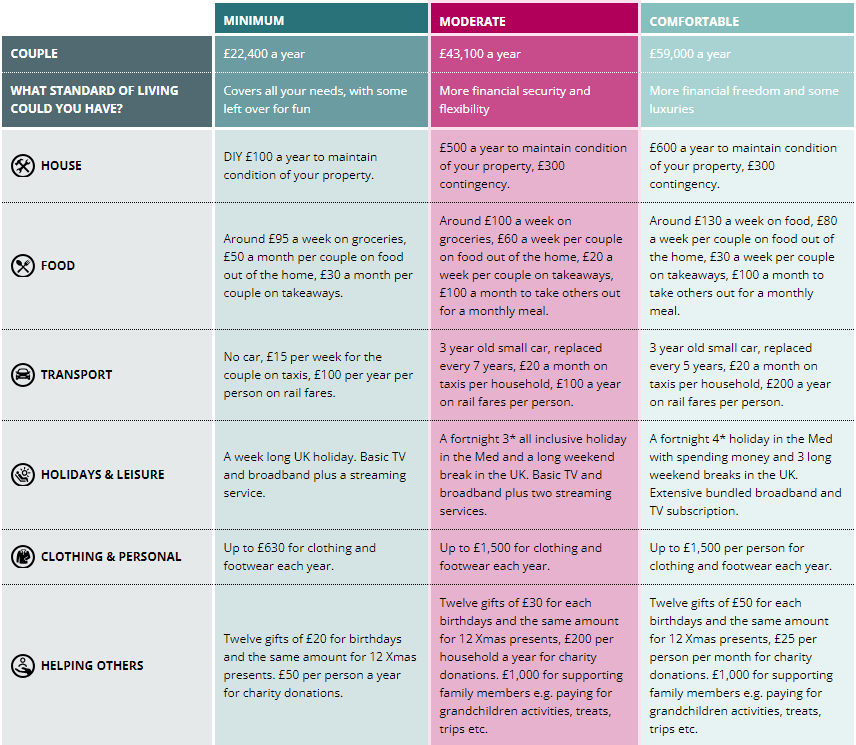
Figure 2 - Types of expenditure, Source: Pensions and Lifetime Savings Association, 2024
*The figures shown are the amounts of annual expenditure required to achieve the living standard (ie they are not gross income figures).
With the cost of living in retirement on the rise, it’s more important than ever to manage your retirement plans carefully to ensure you don’t get caught out. If you want to find out more about how you can navigate these changes, why not give us a call on 0333 323 9065 or book a free non-committal initial consultation with one of our chartered advisers to find out how we might be able to help you.
Arrange your free initial consultation
This article is intended for general information only, it does not constitute individual advice and should not be used to inform financial decisions.

How the Budget could affect your finances
Chancellor Jeremy Hunt will unveil his Spring Budget on 6 March, which is likely to be his last fiscal announcement before the upcoming General Election.
Before the Autumn Statement in November 2023, there were rumours of Inheritance Tax being scrapped, a change in the calculation of the State Pension, and an ISA aimed at boosting investment into the UK. Instead, pensioners received a boost as the calculation of the State Pension remained unchanged, so they will receive the full 8.5% increase in April. Additionally, instead of the other changes we were expecting, National Insurance was reduced, resulting in an annual saving of up to £754 p.a. for workers.
The Prime Minister, Rishi Sunak, is under pressure personally with the Conservatives still trailing Keir Starmer's Labour Party significantly in the polls, so there is an expectation that big changes need to be announced to change the minds of voters. So, what can we expect?
Arrange your free initial consultation
Inheritance Tax
After opting to cut National Insurance rather than Inheritance Tax in the Autumn Statement, it would seem unlikely that the Chancellor would opt to cut Inheritance Tax now, especially given the relatively small number of voters any change would affect, relative to a further cut in National Insurance or Income Tax.
By way of reminder, Inheritance Tax is payable at 40% when the estate of an individual exceeds £325,000 (though there are increased allowances when main residences are left to direct descendants) and gifts, both directly and into trust, must also be accounted for. Please speak to your TPO adviser for further information.
Additionally, there could be unintended consequences if Inheritance Tax were to be scrapped as previously reported. An example of this could be the impact on some small UK companies, as investors into these can potentially benefit from inheritance tax relief (although these investments are high risk and not suitable for all investors), so the removal of this relief could reduce their appeal to investors.
Income Tax / National Insurance
For the reasons mentioned above, it’s likely Income Tax or National Insurance may be cut rather than Inheritance Tax, in a move that can be framed as a pre-election giveaway. However, as was widely reported after the National Insurance reduction in the Autumn Statement, any reduction’s impact is likely to be minimal when compared with the combined impact of frozen tax bandings and high inflation over the past few years.
This theory is supported by The Resolution Foundation, who have calculated, “Cutting the basic rate of Income Tax by 1p while maintaining the personal allowance freeze next year would mean anyone earning less than £38,000 would see their personal tax bills rise rather than fall.”
Child Benefit Threshold
Another option for the Chancellor could be to raise or scrap the current £50,000 earnings threshold above which Child Benefit starts to reduce.
This would prove popular with some voters, but it would be expensive and would benefit a smaller percentage of the voting public than an outright reduction to Income Tax or National Insurance.
Conclusion
A study by Capital Economics calculates Chancellor Jeremy Hunt has about £15bn in headroom with which he can cut taxes. It will be interesting to see which areas any pre-election giveaways are targeted at and how far Mr Hunt’s tax cuts will go. If he does not go far enough, the Conservative Party could face a wipeout at the next election, but if he goes too far and bond markets view the tax cuts as unfunded, we could have a repeat of Kwasi Kwarteng’s “Mini-Budget’ which caused chaos in bond markets in September 2022.
Mr Hunt has sought to gain market confidence through financial discipline during his tenure as Chancellor and he will not want to jeopardise this in what could be his final budget, he will be under pressure to give Conservative candidates a budget upon which they can build an election campaign.
If you’d like to learn more about how you can minimise the amount of tax you pay on your wealth, why not get in touch and speak to one of our experts for a free initial consultation.
Arrange your free initial consultation
This article is intended for general information only, it does not constitute individual advice and should not be used to inform financial decisions.
The Financial Conduct Authority (FCA) does not regulate tax advice.