Skip to main content
Autumn Statement – what the announcements mean for your finances
Chancellor Jeremy Hunt promised to ‘reduce debt, cut taxes and reward work’ in his ‘Autumn Statement for growth’, but what might the changes he announced mean for your personal finances?
In the lead up to the Autumn Statement, we discussed the changes that were rumoured to have been announced in this article.
Arrange your free initial consultation
These speculated changes included:
- Reducing Inheritance tax
- Announcing an additional ISA allowance for investment into UK companies
- Changing the state pension triple lock calculation to limit next year’s state pension increase
In the end, none of these changes were introduced, with shadow chancellor Rachel Reeves claiming Hunt wanted to reduce inheritance tax but that he “couldn’t get away with it in the middle of a cost of living crisis”. Instead, the headline grabbing change was the 2% reduction to employee national insurance contributions between £12,571 and £50,271. This will equate to an annual saving of c. £754 p.a. to those earning over £50,270 p.a. with effect from January 2024. Additionally, there were National Insurance reductions for the self-employed, with Class 2 contributions effectively abolished and Class 4 contributions reduced from 9% to 8% between £12,571 and £50,271 with effect from April 2024.
However, this will only go part of the way to make up for the impact of the continued freezing of the income tax bands, which will remain frozen until 2028. Indeed, as a result of higher inflation, higher interest rates and frozen tax bands, the Office for Budget Responsibility (OBR) states “Living standards, as measured by real household disposable income per person, are forecast to be 3.5 per cent lower in 2024-25 than their pre-pandemic level.”
Separately, the speculated ISA allowance increase for investments into UK companies did not materialise and pensioners will be pleased to hear Mr Hunt state the government will “honour our commitment in full” as the state pension rises by 8.5% next year.
Regarding pensions, workers will hope a new legal right for their new employer to pay into their previous defined contribution pension scheme will simplify pension planning going forward and will mean an end to the accumulation of multiple schemes as individuals move between companies.
This was an Autumn Statement with half an eye on an upcoming general election, with announcements that should put more money in the pockets of workers and pensioners alike. Mr Hunt repeatedly referred to the OBR’s forecasts during his announcement as he tried to rebuild credibility, a little over a year after Liz Truss and Kwasi Kwarteng’s ‘mini-budget’, prior to which the OBR was not asked to run forecasts. Overall, Mr Hunt will have been grateful that he was able to use some of the fiscal headroom provided by then Chancellor, now Prime Minister, Rishi Sunak’s decision to freeze income tax bands back in 2021 to offer a national insurance cut and significant state pension rise to the voting public.
Arrange your free initial consultation
The opinions shared in this article are solely those of the individual and they do not necessarily reflect those of The Private Office.
Do I need pension financial advice?
Navigating pension planning can be complex and often presents a variety of questions. Reaching retirement can be an exciting prospect after a long time working, but also, for many, can be a nerve-wracking time, demanding careful consideration to ensure you have financial security throughout retirement. With several options, strict regulation and variables to contemplate, it’s important to get it right.
Arrange your free initial consultation
Why do I need a financial adviser for my pension?
Your pension can be the largest investment you ever make, but they are complex, with various types of schemes, so it’s important to understand what you have, and how you can use this to meet your goals and individual objectives. Working with a financial adviser can help to work through the jargon and ensure that you can maximise your pension wealth both now and into the future. An adviser can help you manage any risk you take within your pension, as well as get a clearer understanding of tax efficiencies to give you the best opportunity of reaching your retirement goals.
When is a financial adviser for my pension required by law?
In most cases, it’s a choice whether you take pension financial advice, however, there are a few exceptions which vary depending on the type of pension you hold.
There are two types of pensions; defined benefit pensions (also known as a final salary scheme, but also include public sector schemes for example Career Average Revalued Earnings, or CARE) and defined contribution pensions. A defined benefit pension pays a secure income for life, based on a number of factors including years' service and position held at your place of work. A defined contribution scheme (which is the more common these days) can be a private or work-based pension, with the amount you receive from your pension based on the total amount contributed by retirement.
If you are considering transferring, or cashing in, a defined benefit pension, you are legally required to seek financial advice when the transfer value is over £30,000. Defined benefit pensions are hugely valuable, providing a guaranteed income for life, therefore it’s vital that you make the correct decision with these types of pensions. The regulator, the Financial Conduct Authority (FCA), requires you to take financial advice to safeguard you from making poor decisions. As this area of advice is complex, it does usually carry a high adviser charge to explore the various options available to you.
In some circumstances, defined contribution pensions may require you to take advice. If you have a pension that has a Guaranteed Annuity Rate (GAR) or guaranteed minimum pension that you’d like to transfer and these benefits are valued at over £30,000, you must legally take advice to protect you from making an irreversible decision that negatively impacts your financial future.
Defined contribution pensions, sometimes also known as money purchase pensions, can also come with a variety of weird and wonderful benefits, which include safeguarded benefits as outlined above, which may mean you legally must seek financial advice. Within defined contribution pensions, you build up an investment pot which you are then able to access from normal minimum retirement age, which is currently 55, but rising to 57 by April 2028. At this age, you can draw on your pension flexibly, with 25% tax free and the remaining 75% taxable at your marginal rate. You can draw the full 25% as one lump sum, or a smaller amount at a time until used up, draw a lump sum payment, known as UFPLS (uncrystallised fund pension lump sum) of which 25% is tax free, and 75% taxable. These rules are known as Pension Freedoms rules and were brought in back in 2015. It’s worth noting however, that just because these rules apply now, doesn’t mean your pensions allow for this, so it is worth finding out.
Understanding the Rules
Within defined contribution pensions, you build up an investment pot which you are then able to access from normal minimum pension age, which is currently 55, but rising to 57 from 6 April 2028. At this age, you can draw on your pension flexibly, with up to 25% usually available tax free, subject to the lump sum allowance, and the remaining withdrawals taxable at your marginal rate. The standard lump sum allowance is currently £268,275, although some people may have a higher protected allowance. You can draw the full 25% as one lump sum, or a smaller amount at a time until used up. You may also be able to take lump sum payments known as UFPLS, or uncrystallised funds pension lump sums. With UFPLS, 25% of each payment is usually tax free and 75% is taxable as income. These rules are known as Pension Freedoms rules and were brought in back in 2015. It’s worth noting however, that just because these rules apply now, doesn’t mean your pensions allow for this, so it is worth finding out.
Do I need a financial adviser to withdraw from my pension?
Although there is no legal requirement to take pension financial advice when withdrawing money from your pension, it is often prudent to do so. Pensions can be used extremely efficiently to fund retirement, although it does depend on what options you have available to you. As mentioned above, Pension Freedoms rules came into force in April 2015, meaning you can access your pension flexibly, as and when you want to. Not all schemes had to adopt these rules however, so making sure your pensions are structured correctly before you draw on them can really impact your retirement plans.
When you reach retirement, you move from the saving phase of life to the spending phase, accumulation to decumulation, and so it’s important to know how much you have, and how best to draw on your assets efficiently to maximise what you have. A financial adviser can help with this by building a retirement plan for you, using such tools as cash flow planning, making sure you can meet your goals throughout retirement. Understanding what you have, and how you can best use each asset comes down to the options you have for these, and a financial adviser can help you to understand this. A big worry for many is the thought of running out of money, and cash flow planning can alleviate these fears by showing what is possible now and in the future.
Can I withdraw my private pension before 55?
In most cases, you cannot withdraw money from a private pension before age 55 without facing significant tax charges. This age is known as the normal minimum pension age and it is due to rise to 57 from 6 April 2028. There are limited exceptions, such as serious ill health or a protected pension age within your scheme, but these rules can be complex. You should also be cautious of anyone suggesting you can access your pension early through a loan, loophole or special arrangement, as this can be a sign of a pension scam.
When can I withdraw my pension?
Most people can start withdrawing from a private pension from age 55, rising to 57 from 6 April 2028, as mentioned above. This does not mean you have to take your pension at that age. You can usually leave it invested until you need it, which may give your pension more time to grow. Your options will depend on the type of pension you have and the rules of your scheme, so it is important to understand what is available before you decide when to take money out.
Can I withdraw my pension fund while working?
Yes, you can usually withdraw money from your pension while continuing to work, provided you have reached the minimum pension age and your scheme allows it. This can be useful if you want to reduce your hours or phase into retirement, but taking taxable pension income while you are still earning can push you into a higher tax band. It may also trigger the Money Purchase Annual Allowance, which can reduce the amount you can contribute to defined contribution pensions while still receiving tax relief to £10,000 a year.
Can I withdraw 25% of my pension tax-free every year?
You can usually take up to 25% of your pension as a tax-free lump sum, but this does not normally mean you can take 25% of the same pension tax free every year. The tax-free amount is usually linked to the value of the pension being accessed and is subject to the standard lump sum allowance, currently £268,275. Some people take their tax-free cash in one go, while others take it gradually by accessing parts of their pension over several years.
What are the benefits of pension financial advice?
Pensions are long term investment vehicles, and a financial adviser can help you make informed decisions and recommend an appropriate investment strategy for you, taking into account how much risk you are comfortable with.
Tax rules can be complex with pensions, and working with a pension financial adviser can help you understand how much you can put into your pension now, but also how you draw on your pension efficiently when you retire, to make the most of the tax benefits.
Currently pensions are an effective tool for estate planning purposes, passed on as you wish when you die. However this is due to change from 6 April 2027, when most unused pension funds and death benefits are expected to be brought within the value of a person’s estate for inheritance tax purposes. This could affect how pensions are used within estate planning and may make it even more important to review beneficiary nominations and the wider retirement plan.
Increasingly people are turning to (Artificial Intelligence) AI for financial advice due to its quick and accessible nature. This can be useful for general information around finances, but it’s important to bear in mind that any ‘advice’ offered by AI regarding your specific situation can be unreliable (as shown by the frequent ‘hallucinations’ that AI is prone to) and not subject to any of the regulations that registered financial advisers must follow. These regulations were put in place to protect the consumer against advice that could be misleading or even malicious and the Financial Conduct Authority (FCA) is currently investigating ways to regulate AI financial advice. AI is not currently a substitute for regulated financial advice in its current form, and if you are considering making any important financial decisions based on the recommendations of these AI sources, it is strongly recommended to reach out to a financial adviser instead.
A financial adviser will keep up to date with legislation surrounding pensions, which can change. We have seen many changes with pensions over the past decade, with the introduction of auto-enrolment, Pension Freedoms rules and now with confirmed changes to the inheritance tax treatment of most unused pension funds and death benefits from 6 April 2027. These changes can really affect retirement plans. Working with an adviser will ensure that you are kept up to date with these changes, and act where required.
It’s worth noting that working with a financial adviser doesn’t come for free so there will be additional costs, but this cost should provide you with long term benefits. Having that trusted person to manage your pension on your behalf, so you don’t have to worry about it and can enjoy living your life, can provide immeasurable value.
How we can help
Working with the Private Office, either as a short term, one off or an ongoing basis, can help you achieve your goals, whether you want to retire earlier than anticipated, or start to work in a different way, phasing retirement over time. Having the knowledge that your pensions are working as hard for you as they can, can really provide peace of mind in the long run. Having a well-thought-out retirement plan that a professional is keeping track of can reduce stress and ultimately help achieve your goals.
At The Private Office, everything starts with building your financial plan, understanding what you want to achieve in life, and then finding the solution which means your money will support you. Pensions are so highly regulated but unfortunately that comes with a huge amount of industry jargon, so part of our job is making sense of this for you, making sure you understand what you have but ultimately ensuring that you don’t have to worry and instead can enjoy your life before and into retirement.
Arrange your free initial consultation
This article is intended for general information only, it does not constitute individual advice and should not be used to inform financial decisions.
The information in this article is based on current laws and regulations which are subject to change as at future legislations.
A pension is a long-term investment. The value of an investment and the income from it could go down as well as up. The return at the end of the investment period is not guaranteed and you may get back less than you originally invested.
The Financial Conduct Authority (FCA) does not regulate tax advice, estate planning or cashflow modelling.

Inheritance tax planning – Strategies to protect your wealth
Former Labour Chancellor, Roy Jenkins, famously described Inheritance Tax (IHT) as a “voluntary levy paid by those who distrust their heirs more than they dislike the Inland Revenue”. While that statement may divide opinion, there is no doubt methods exist in order to mitigate or avoid completely an IHT liability on your estate on death.
Inheritance tax receipts
IHT receipts in the UK amounted to £8.25bn in the 2024/25 tax year, a staggering increase of over £700m from the previous tax year which was a previous peak.
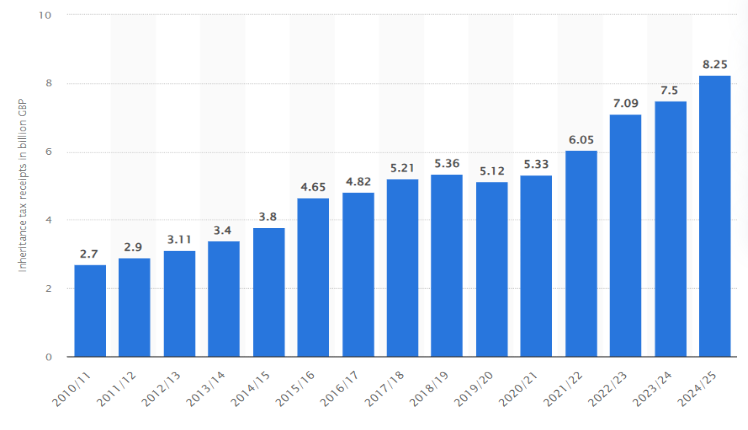
Figure 1 - Inheritance tax Receipts 2020-2025, Source: Statista
This can be in part attributed to a ‘stealth tax raid’ from the Government, as allowances have been frozen for a number of years, with the chancellor, Rachel Reeves, also announcing in her Autumn Budget last year that the current IHT thresholds would be frozen until at least April 2031.
Currently, the ‘nil rate band’ allows you to pass on £325,000 of your estate without paying IHT, and an additional ‘residence nil rate band’ of £175,000 is potentially available if your main residence is passed on to direct descendants, giving an IHT allowance of £500,000 per individual or £1m for a married couple/ civil partners. Any value of your estate above these thresholds will typically be subject to IHT at 40% (as noted in more detail below, the latter allowance can be tapered if your estate value exceeds £2m).
Although an IHT-free threshold of £1m may seem quite generous, the number of people caught in the IHT net has been increasing for several years, due in the main to the rapid increase in property prices. In the 20 years running up to October 2025, which is the latest stats from the Land Registry, the average UK house price has almost doubled to nearly £270,000.
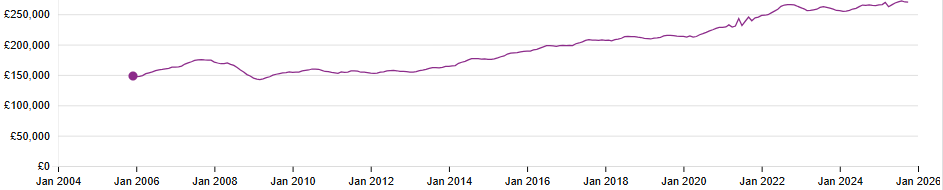
Figure 2 - Average price by property in UK, Source: Land Registry
The residence nil rate band taper
Inheritance tax planning becomes increasingly valuable for estates exceeding £2 million, where the potential tax savings can be most significant. For every £2 of your estate value over £2m, the residence nil rate band is reduced by £1. Therefore, the full residence nil rate band is lost if the value of your estate exceeds £2.35m for an individual or £2.7m for a married couple.
What this means in practice is that for a married couple with an estate value of £2.7m the IHT-free allowance can be reduced from £1m down to £650,000, potentially resulting in an additional IHT liability of up to £140,000 (£350,000 @ 40% IHT) due to the loss of this valuable additional allowance.
What can I do to reduce my Inheritance tax bill?
Whilst inheritance tax planning can take the form of complex trust arrangements where appropriate, below are some of the key IHT mitigation strategies to consider:
Spend more – an often overlooked but simple and effective method of reducing the value of your estate, which you will also hopefully get some personal enjoyment from!
Gifting – as shown below, there are certain types of gifts that will fall outside of your estate immediately for IHT purposes. Any gifts that are not immediately tax exempt or within the annual allowances are treated as either potentially exempt transfers (PETs) or chargeable lifetime transfers (CLTs). PETs allow you to make gifts of unlimited value which will be exempt from IHT if you survive for a period of 7 years, subject to the 14 year rule not applying. If you don’t survive the gift by 7 years, the PET becomes chargeable and is added to the value of your estate.
Certain gifts, most commonly gifts into trust, may instead be treated as CLTs and could give rise to an immediate IHT charge, depending on the circumstances. Specific rules may apply to any gifts made into trusts. Please do get in touch if you require information in this regard.
IHT gifting strategies
Annual gifts
Individuals can give up to £3,000 each tax year free of inheritance tax, and any unused allowance from the previous year can be carried forward one year, allowing up to £6,000 to be gifted in a single year.
Small gifts
You can give as many gifts of up to £250 per person each year, provided each recipient is different. These small gifts are separate from and additional to the annual £3,000 exemption. However, they can't be in addition to the £3,000 given to one individual.
Wedding gifts
Certain gifts made in anticipation of a wedding or civil partnership are exempt. The limit is:
- £5,000 to a child
- £2,500 to a grandchild or great-grandchild
- £1,000 to any other person.
Gifts from income
Regular gifts can be made from surplus income without triggering inheritance tax, as long as these payments are genuinely from income rather than capital and do not reduce your normal standard of living. They must also form a pattern.
Gifts to charities and political parties
Gifts to registered charities and qualifying political parties are free from inheritance tax, whether made during your lifetime or on death.
Lifetime gifts
Gifts that do not fall under a specific exemption are treated as potentially exempt transfers or a chargeable lifetime transfer (CLT). These may become fully exempt if you survive seven years, but they can be brought into account if death occurs within that period.
How to reduce your IHT rate from 40% to 36%
Another benefit of gifting to charity is if 10% of your net estate (i.e. the value of your estate above the tax-free allowances) is gifted to charity on death, the rate at which IHT is charged on your taxable estate falls from 40% to 36%. This can significantly reduce any ‘cost’ of a gift to charity and ultimately the amount of your estate that is paid to the taxman.
Life insurance to reduce IHT
Set up a life insurance policy – although not mitigating IHT, a life insurance policy can ensure that your beneficiaries have sufficient capital to cover the IHT liability. It is important to consider writing the policy in trust, so it doesn’t form part of your estate and the payment on death is accessible for your beneficiaries prior to any required IHT payment.
Investing in business relief assets to reduce IHT
Invest in Business Relief (BR) assets- originally designed to allow family businesses to be passed through generations without the need to be sold or broken up to meet an IHT liability, Business Relief can apply to certain qualifying investments, such as shares in unquoted qualifying companies. While most lifetime gifts are subject to the seven‑year rule, qualifying Business Relief assets can be transferred free of IHT once they have been owned by the donor for at least two years.
There are two tax points for IHT that the donor should be aware of on a gift of Business Relief assets. One is at the point of making a gift and the other is at the point of death of the donor, if death occurs within seven years of the gift. The gift of BR shares should provide relief from IHT, provided they were held for at least two years. It is important to note that once an asset has been gifted, control over that asset cannot be retained by the donor. On death, the recipient needs to hold the shares for seven years or, if earlier, at the time the donor dies, for the gift to continue to provide relief from IHT in the donor’s estate. If the recipient disposes of the shares before the donor’s death or before seven years have elapsed, the relief may be lost and the value could become subject to IHT in the donor’s estate.
From April 2026, the combined allowance for Business and Agricultural Property Relief will be capped at £2.5 million per individual (transferable between spouses), with any excess qualifying for relief at 50%. This allowance will refresh every seven years for lifetime gifts and will be indexed to CPI from 2031. In addition, unquoted shares listed on recognised exchanges such as AIM will only qualify for 50% relief under the new rules.
These types of assets are however typically very high risk and can be difficult to sell, hence should be approached with caution. Therefore, this will not be appropriate for all clients.
Changes in pension legislation
One of the most significant recent changes in the IHT space is the change in pension regulation, expected to come into force from 2027. From 6th April 2027, the Government is planning a significant shift in how pensions are treated for IHT. Under the new rules, most unused pension pots and death benefits will count as part of your estate, meaning they could be taxed at up to 40% if they push the total value of your estate over your available thresholds. This is a significant change from current treatment, where pensions have generally been exempt from IHT and therefore used as an estate‑planning tool.
Looking ahead, pensions will play a much bigger role in estate planning than before. With upcoming changes to the IHT rules, it is important to review how your pension fits into your overall strategy. This could open up new opportunities to protect wealth, manage tax efficiently, and ensure your assets are passed on in the way you intend
With these changes in mind, it is important to keep pension funding as a key part of your wealth building strategy before retirement. Pensions don’t just help you prepare for later life, they also provide valuable tax advantages, such as tax relief on contributions and tax efficient growth. Making the most of these benefits now can give you greater flexibility and security in the future. What’s more, recent changes have made pensions even more attractive as the standard annual allowance for contributions has increased from £40,000 to £60,000, and the lifetime allowance has been removed, giving you more scope to invest for the long term.
Can I just gift my main residence to my children?
In simple terms, no. If you continue to live in the property after the gift was made, this will be treated as a ‘gift with reservation of benefit’ and the property would remain in your estate. In order for this strategy to be effective, you would need to pay your children the full market rate rent after gifting the property to them, which can result in additional tax consequences.
How we can help
A starting point for estate planning is ensuring you have a valid Will in place. This will ensure that your estate is distributed as per your wishes and could reduce the potential IHT liability payable on your death.
Thereafter, whilst mitigating IHT may seem like a key objective, a balance needs to be struck between tax efficiency and retaining sufficient assets to meet your own needs in later life.
One method in which we can assess the viability of different IHT mitigation methods is through cash flow modelling, whereby your financial future is mapped out so you can see what wealth you need for the life you want, so why not get in touch today to arrange a free no obligation initial discussion with one of our expert advisers
Arrange your free initial consultation
This article is intended for general information only, it does not constitute individual advice and should not be used to inform financial decisions.
This article is also based upon our understanding of current law, HM Revenue and Custom's practice, tax rates and exemptions which are subject to change.
The Financial Conduct Authority (FCA) does not regulate cash flow planning, estate planning, will writing, tax or trust advice.
A pension is a long-term investment not normally accessible until age 55 (57 from April 2028 unless the plan has a protected pension age). The value of your investments (and any income from them) can go down as well as up which would have an impact on the level of pension benefits available.

Gifting to charity and reducing your Inheritance tax bill? It’s a win-win!
There is no denying the charity sector is feeling the strain. Running costs, declining government support and demand for services are rising, while disposable incomes are being squeezed by increasing taxes, frozen allowances and an uncertain economic climate.
As a result, organisations are being forced to think differently about how they raise money in the current climate. Some are placing a greater emphasis on “legacy fundraising” i.e. when someone designates part of their estate to a chosen charity in their will. Nevertheless, this method of fundraising could face future challenges.
Additionally, multiple news outlets are reporting that Prime Minister Keir Starmer is considering plans to increase inheritance tax revenue by tightening rules around the gifting of assets, among other suggestions, at the next budget. This could mean that charitable tax incentives would become less prominent as a way to mitigate tax for high-value estates, which could have an impact on the number of people who leave assets to charity in their will. While we await the outcome of the impending budget, for now, those looking to minimise their tax bill while doing good for the world have a golden opportunity.
Arrange your free initial consultation
How can I reduce Inheritance tax by giving to charity?
Currently, gifts to registered charities are exempt from inheritance tax (IHT). This can either be done through donating during your lifetime, or on death through your will.
As a reminder, everyone has a ‘nil rate band’ exemption for IHT, (currently at £325,000 per person). Furthermore, if you are passing your main residence to your direct descendants, you can also benefit from an additional exemption of up to £175,000 – this is known as the “residence nil rate band”.
Case Study 1 Example:
Mr A has an estate valued at £550,000 including a £300,000 main residence that he is planning to pass on to his children. He also utilises his annual gifting allowance every tax year. As a result, Mr A will benefit from £500,000 of allowances, as per below:
- £325,000 nil rate band
- £175,000 residence nil rate band
The excess (i.e. £50,000) would ordinarily be taxed at 40%, leading to a £20,000 tax liability. However, if Mr A left £50,000 to charity, his estate (now £500,000) would fall within the respective nil rate bands, which means there would be no inheritance tax to pay.
Bequeath on death
Further to the above, you also have the potential to reduce the rate of inheritance tax to 36% if you leave at least 10% of your net estate to charity. This is typically achieved by leaving a charitable gift via your will.
The net estate "baseline amount" is calculated by deducting IHT exemptions, reliefs and nil-rate band from the total estate value (however this does not include the deduction of the residence nil-rate band).
If the value of the gift is at least 10% of the "baseline amount", the reduced 36% rate of inheritance tax will be applicable.
You could also consider a charitable trust; gifts to charities placed in trust are free of IHT.
Case Study 2 Example:
Ms B has an estate valued at £1,000,000 including a £400,000 main residence that she is planning to pass on to her children. She also utilises her annual gifting allowance every tax year and was planning to leave £40,000 of her estate to charity.
To keep things simple, we are going to assume that she has her full nil rate band and residence nil rate band, as per Case Study 1.
This means we would calculate Ms B’s inheritance tax liability as follows:
| Estate | £1,000,000 |
| Net estate/ baseline value (Estate - NRB) taxable estate | £675,000 |
| Charitable gift | (£40,000) |
As the value of gift is below 10% of the baseline value (£67,500), IHT will be chargeable at 40%.
| Estate | £1,000,000 |
| Less nil rate band & residence nil-rate band | (£500,000) |
| Less Charitable gift | (£40,000) |
| Tax to be calculated using... | £460,000 |
| IHT @40% | (£184,000) |
| Distribution to MS B's beneficiaries | £776,000 |
Nevertheless, if Mrs B gifted 10% of her net estate (calculated at £67,500 - detailed above) instead of £40,000, it would have the following impact:
| Estate | £1,000,000 |
| Less nil rate band and residence nil rate band | (£500,000) |
| Less Charitable gift | (£67,500) |
| Tax to be calculated using... | £432,500 |
| IHT @ 36% | (£155,700) |
| Distribution to Ms B’s beneficiaries | £776,800 |
As shown above, the planning in this scenario has not only slightly increased the amount the beneficiaries receive, but also the charity has received a further £27,500. This represents a win-win situation for both parties.
Can I pay a lower rate of inheritance tax after someone has died?
This may be possible through a Deed of Variation. This is a legal document that allows the distribution of the estate to be altered by the named beneficiaries in the will.
A Deed of Variation can be used to re-direct 10% of the net estate to charity, which means the estate would pay a reduced rate of inheritance tax (36%).
A Deed of Variation needs to be carried out within two years from the date of death for it to be effective from a tax perspective. Furthermore, the relevant paperwork must be signed by all executors and the beneficiaries who may be disadvantaged because of the change.
To help you visualise these numbers, we've put together this Inheritance Tax calculator:
For individuals with large estates, our specialist high-net-worth financial advisers can integrate charitable giving into an overall tax minimisation strategy
If you are concerned about inheritance tax, or how this relates to charitable giving, why not get in touch with The Private Office and give us a call on 0333 323 9065 or book a free non-committal initial consultation.
Arrange your free initial consultation
This article is for information only and does not constitute individual advice. The information provided in this article is based on the current allowances and legislation and is subject to change.
The Financial Conduct Authority (FCA) does not regulate estate planning or tax advice.

Increasing reliance on the Bank of Mum and Dad & the Bank of Gran and Grandad!
The financial support provided by parents and grandparents has long played a role in family life, but in recent years, it has become almost essential in defining the financial future of younger family members of and the wider economy. Dubbed the ‘Bank of Mum and Dad’, this intergenerational flow of wealth is increasingly crucial in helping younger people buy their first homes, fund their education, and establish financial security.
As house prices have surged far beyond wage growth, saving for a deposit has become an uphill battle. The average first-time buyer in the UK now often faces a deposit hurdle of over £65,000, a sum that would take years to accumulate without external support. In high-cost areas such as London and the South East, these figures frequently exceed £100,000. Faced with this reality, over 50% of young homebuyers now rely on financial help from family to get onto the property ladder. Without parental contributions, home ownership is increasingly out of reach for those without inherited wealth, effectively making family support a structural necessity rather than a bonus.
A similar pattern is evident in higher education. Recent media coverage and parliamentary discussions have highlighted the growing "multigenerational burden" of student debt. The Government may be capping student loans at 6% from September, which is good news for those currently paying much more, however many graduates will continue to see their balances grow faster than they can repay them. While some rely on these loans, we are seeing an increasing number of parents and grandparents stepping in to cover fees or living expenses outright. This financial head start provides a significant long-term advantage, allowing graduates to begin their careers without the burden of high-interest debt that would otherwise delay their ability to save, invest, or move into their own homes.
Arrange a free initial consultation
What does this mean for society?
Beyond individual families, the ‘Bank of Mum and Dad’ has wider economic implications. As wealth is increasingly passed down through gifting, it alters patterns of financial security and social mobility. Those who receive help enjoy an advantage not only in property ownership but in long-term financial stability.
Research from the Institute for Fiscal Studies confirms that parental earnings are now a stronger predictor of young people’s future income than in previous generations, reinforcing economic divides between those with access to family capital and those without.
The shifting landscape of Inheritance Tax
For wealthier families, gifting money to children has always served a strategic purpose. Under current UK tax laws, financial gifts made more than seven years before the giver’s death typically fall outside of inheritance tax (IHT) calculations. In addition, parents can pass down most defined contribution pensions free of inheritance tax, in addition to their nil rate band allowance.
However, the strategy behind this is evolving. From April 2027, unused pension funds are set to be included within the value of a person’s estate for IHT purposes. Historically, pensions were a protected way to pass on wealth, but this change looks to already be accelerating a “giving while living" approach. Many grandparents are now choosing or considering choosing to pass down wealth earlier in their lifetime, utilising surplus pension income or lump sums now, to support their grandchildren’s immediate needs while simultaneously reducing the potential 40% tax on their future estate.
Given that IHT is charged at 40% on estates above the £325,000 nil rate band (or £500,000 with the residence nil rate band when passing down your main home to direct descendants), proactive legacy planning is becoming more essential as we approach the 2027 deadline.
The risk of overextending
Despite the clear benefits to the younger generation, parental generosity is not without its risks. As life expectancy increases and the cost of living remains a factor, many parents or grandparents must carefully balance their desire to support their children with their own financial security.
Rising care costs and later-life expenses mean that some retirees could deplete their savings too quickly. A recent survey suggests that over half of UK adults expect to financially support their own parents as they age, illustrating how wealth flows in complex and sometimes unpredictable ways. It is vital that "The Bank of Mum and Dad" does not compromise their own retirement to fund the next generation's present.
The risk of waiting too long - the cognitive ‘timebomb’
While many families focus on the "when" of passing down wealth, we must also consider the risk of waiting too long. One increasingly discussed issue is the potential for assets to become effectively "locked" due to cognitive decline. As we live longer, conditions such as dementia can make it difficult for parents or grandparents to make the very gifts they intended to provide.
We can look to countries like Japan to see the impact of this, where vast sums of personal wealth have become inaccessible because the owners no longer have the capacity to manage them. While the UK is at an earlier stage of this challenge, the trend is clear. Without proactive planning, including the use of Lasting Powers of Attorney, families may find themselves unable to access or manage assets just when they are needed most.
The future of the ‘Bank of Mum and Dad’
The influence of family lending is unlikely to diminish anytime soon. With housebuilding targets continuing to be a challenge and real wages struggling to keep pace with property prices, the need for support shows no signs of easing. Families will continue to navigate the challenges of intergenerational transfers, seeking to strike a balance between supporting their children and securing their own futures.
If you’re considering passing on wealth, early planning is key, especially with the 2027 pension changes coming in next year. Seeking professional financial advice can help structure gifts in the most tax-efficient way, ensuring wealth is preserved and ideally kept in the family.
If you’re looking for advice on the best way to support your loved ones while protecting your own future, why not get in touch for a free initial consultation to see how we can help.
Arrange a free initial consultation
The information contained within this article is for guidance only and does not constitute advice which should be sought before taking any action or inaction. The information is based on our understanding of legislation, whether proposed or in force, and market practice at the time of writing. Levels, bases and reliefs from taxation may be subject to change.

Gifts out of Surplus Income
Inheritance tax (IHT) receipts continue to rise year on year. In the 2024/25 tax year, HMRC collected a record £8.2 billion in inheritance tax, the highest figure ever recorded. With asset values remaining high, tax thresholds frozen and pensions coming into your estate in 2027 for inheritance tax purposes, this upward trend looks set to continue.
In the Autumn Statement 2025, the government confirmed that the inheritance tax nil rate band (£325,000) and residence nil rate band (£175,000) will now remain frozen until at least April 2031, along with many others. As a result, more families are being drawn into the inheritance tax net, often unintentionally, simply due to inflation and rising property values.
Arrange a free initial consultation
While much inheritance tax planning focuses on lifetime gifts and the familiar seven-year rule, one of the most powerful yet frequently overlooked exemptions is the ability to make regular gifts from surplus income. When structured correctly, these gifts are immediately exempt from inheritance tax, with no seven-year survival requirement and no upper monetary limit.
Used effectively, gifting from surplus income can significantly reduce the value of an estate over time while allowing individuals to support loved ones during their lifetime, often when that support has the greatest impact.
A changing landscape for family wealth
The ongoing cost-of-living pressures, high housing costs and financial challenges faced by younger generations have prompted many families to rethink how and when wealth is passed on.
Rather than leaving large sums to be taxed on death, many individuals are choosing to pass wealth down gradually and tax-efficiently. For those with strong and sustainable income in later life, gifting from surplus income can form the cornerstone of an effective inheritance tax strategy.
Prioritising your own financial security
Before making any gifts, it is essential to ensure your own financial security is not compromised. This includes having confidence that you can meet:
- Your day-to-day living costs
- Inflationary pressures
- Potential future care costs
- Lifestyle and legacy objectives
Only once this has been established should gifting be considered. Cashflow modelling is often invaluable in identifying how much income is genuinely surplus and can be gifted without affecting your standard of living.
 |
Annual gifting exemptionYou can give away a total of £3,000 worth of gifts each tax year, known as your ‘annual exemption’. It can be gifted to one person or split between several people. If you didn’t use the exemption in the previous tax year, you can carry it forward for one year and combine it with the exemption for the current tax year and gift up to £6,000. |
 |
Small giftsYou can give as many small gifts of up to £250 per person as you like each tax year – just make sure you haven’t used another allowance (like the annual gifting allowance mentioned above) for the same person. |
 |
Wedding giftsYou can give a tax-free gift to someone who’s getting married or entering a civil partnership. The limits are
If you’re gifting to the same person, you can combine this wedding gift allowance with your annual exemption, but not with the small gift allowance. For example, you could give your child £5,000 as a wedding gift and an additional £3,000 using your annual exemption, all in the same tax year. |
 |
Gifts to charities and political partiesGifts to registered charities and political parties are exempt from inheritance tax. |
 |
Gifts from incomeYou can make regular gifts from your surplus income as long as they don't affect your normal standard of living. Any gifts must form part of your normal expenditure, meaning that there must be an observable, regular pattern, should HMRC decide to audit any records. You can combine this exemption with other allowances (like your annual exemption) when giving to the same person - just not with the small gift allowance. |
 |
Lifetime giftsPotentially Exempt Transfers (PETs) and gifts into Trust: Both are lifetime gifts for inheritance tax purposes and will be affected by the seven-year rule. |
Annual gifting allowance, small gifts and wedding gifts
Before looking at the rules around gifting from surplus income, there are other inheritance tax exemptions available.
Each individual has an annual exemption of £3,000 per tax year. If unused, this can be carried forward one year only, allowing up to £6,000 to be gifted in a single tax year. For couples, this can amount to £12,000.
Other exemptions include:
- Small gifts of up to £250 per person, to an unlimited number of recipients, provided no other exemption is used for that individual
- Wedding and civil partnership gifts of up to:
o £5,000 to a child
o £2,500 to a grandchild or great-grandchild
o £1,000 to anyone else
Gifts to registered charities, qualifying political parties, and UK-domiciled spouses or civil partners remain fully exempt from inheritance tax.
Gifting from surplus income
The gifting from surplus income exemption allows individuals to make regular gifts that are completely exempt from inheritance tax, provided certain conditions are met. Crucially, these gifts fall outside your estate immediately, there is no need to survive seven years.
The three key conditions
To qualify for this exemption, all three of the following conditions must be met:
| Three Key considerations when gifting from income |
|---|
|
Gifts must be made from income, not capital Gifts must come from surplus income remaining after all normal expenditure has been met from income. Selling investments or withdrawing savings does not qualify. |
|
Gifts must form part of your normal expenditure There should be a clear pattern or regularity to the gifts, such as monthly or annual payments. |
|
Gifts must not affect your standard of living After making the gifts, you must still be able to maintain your usual lifestyle comfortably. |
Provided these conditions are satisfied, there is no limit to how much surplus income can be gifted each year.
What counts as income?
Income for these purposes can include:
- Employment or self-employment income
- State Pension and private pensions (including defined benefit schemes)
- Rental income
- Interest and dividends from investments where income used for this purpose is identifiable and clearly distinguished from capital
- The interest element only from Purchased life annuities
Gifts must be made from net income, after tax.
Practical example
A retired couple has a combined net income of £70,000 per year from pensions and investments. Their annual expenditure is £50,000, leaving £20,000 of surplus income.
They decide to gift:
- £1,000 per month to their children, and
- £500 per month into savings accounts for their grandchildren.
As these gifts are regular, funded from surplus income, and do not affect their standard of living, the full £18,000 per year is immediately exempt from inheritance tax. Over ten years, this could reduce their taxable estate by £180,000, potentially saving £72,000 in inheritance tax.
The importance of record keeping
This exemption is assessed only on death, meaning it must be evidenced by executors. Clear record keeping is therefore essential and should include:
- A schedule of gifts detailing dates, amounts and recipients
- Bank statements showing income and payments
- Evidence of regularity, such as standing orders
- A simple written note outlining the intention to gift surplus income
This information will be required when completing form IHT403.
Lifetime gifts and Potentially Exempt Transfers (PETs)
Gifts that fall outside the available exemptions are usually classed as Potentially Exempt Transfers (PETs). These become free of inheritance tax if the donor survives seven years from the date of the gift, providing the 14 year rule is not invoked.
If death occurs within seven years, taper relief may apply:
| Years between gift and death | Rate of tax on the gift |
|---|---|
| 0 to 3 years | 40% |
| 3 to 4 years |
32% |
| 4 to 5 years | 24% |
| 5 to 6 years | 16% |
| 6 to 7 years | 8% |
| 7 plus years | 0% |
Taper relief reduces the tax payable, not the value of the gift, and only applies where gifts exceed the nil rate band.
Gifts into discretionary trusts are classed as Chargeable Lifetime Transfers (CLTs) and may be subject to an immediate inheritance tax charge if they exceed the available nil rate band.
Allowances Recap (2025/26)
| Allowance Type | Amount |
|---|---|
| Annual Exemption | £3,000 (carry forward 1 year) |
| Small Gift Exemption | £250 per person |
| Wedding Gift - Child | £5,000 |
| Wedding Gift - Grandchild | £2,500 |
| Wedding Gift - Others | £1,000 |
| Nil Rate Band | £325,000 |
| Residence Nil Rate Band* | £175,000 |
*As confirmed in the Autumn Statement 2025, the nil rate band and residence nil rate band will remain frozen until April 2031. The residence nil rate band tapers away for estates valued over £2 million.
How can we help
Effective inheritance tax planning is about more than simply reducing tax. It’s about ensuring wealth is passed on in a way that aligns with your values, supports your family and preserves your long-term financial security.
We can help you:
- Build a personalised cashflow model to identify surplus income
- Structure regular gifting strategies that meet HMRC requirements
- Explore wider estate planning options where appropriate
- If you would like to understand how gifting from surplus income could reduce inheritance tax on your estate, speak with one of our expert advisers today.
Contact us to arrange a free initial consultation.
Arrange a free initial consultation
Investment returns are not guaranteed, and you may get back less than you originally invested. Past performance is not a guide to future returns.
The Financial Conduct Authority (FCA) does not regulate cash flow planning, estate planning, tax or trust advice.
This article is intended for general information only, it does not constitute individual advice and should not be used to inform financial decisions.

Inheritance Tax Guide

Do you pay Capital Gains Tax on inherited property?
Inheriting a property from a loved one can be both emotionally significant and financially complex. The process itself can be long and painful and that’s before you’re considering any potential tax bills that might arise. For many beneficiaries, one question is whether receiving the property creates a capital gains tax bill. Luckily, in most cases, the answer is no. You do not usually pay capital gains tax at the point you inherit a property.
However, a potential tax issue can arise later, if the property is sold, gifted, transferred, or otherwise disposed of after it has increased in value since the date of death. That distinction matters, particularly for larger estates investment portfolios or if there has been other taxable gains in the same year. A well timed decision can make a meaningful difference to the eventual tax bill.
Arrange your free initial consultation
What is capital gains tax (CGT)?
Capital gains tax (CGT) is a tax that applies when an investment sells for more than its original purchase price, known as its base cost. We usually think of capital gains tax in terms of selling stocks from an investment portfolio, however, it also applies to other forms of investments such as property or tangible assets.
With capital gains tax, you are taxed on the profit, or “gain”, you make on the sale, rather than the whole amount you receive. For instance, if you bought a piece of artwork for £6,000 and later sold it for £36,000, the gain would be £30,000. This is the amount that your CGT liability would be calculated on, less any annual exempt amount that's available.
How much capital gains tax will I pay?
The rate of CGT you pay is related to your income tax band. There are four tax rates bands:
| Band |
Taxable Income |
|---|---|
| Personal Allowance |
Up to £12,570 |
| Basic rate |
£12,571 to £50,270 |
| Higher rate |
£50,271 to £125,140 |
| Additional rate |
Over £125,140 |
For residential property, the current CGT rates in the 2026/27 tax year are 18% for gains that fall within the personal allowance or basic rate band and 24% for gains that fall within the higher or additional rate bands and the annual exempt amount for individuals is £3,000. This means only gains above your available allowance are potentially taxable.
Note: CGT is not payable on gains made when a residential property is your primary residence and always has been (apart from certain allowable absences).
Does inheriting property trigger CGT?
Inheriting a property does not usually trigger capital gains tax immediately. HMRC states that you do not pay Capital Gains Tax when you inherit property.
Instead, the property is treated as being acquired at its market value on the date of death. This is often referred to as the probate value. If the property is later sold for more than that value, the increase in value may be subject to CGT.
For example, if you inherit a property valued at £500,000 on the date of death and later sell it for £575,000, the starting point for the CGT calculation is the £75,000 increase, not the full sale price. The taxable gain can then be reduced by things like your annual exception and allowable costs.
Note: You are not able to carry forward any unused CGT allowance from previous tax years.
How is the base value (probate value) determined for an inherited property?
The base value is normally the market value of the property on the date the previous owner died. This value is used for inheritance tax purposes and can also become the acquisition cost for CGT if the personal representatives or beneficiaries later dispose of the property.
For higher value properties, it is usually sensible to obtain a professional valuation rather than relying on a rough estimate. This is particularly important if the property is unusual, in a sought after area, jointly owned, let to tenants, or likely to be sold some time after probate.
The probate value (or base value) should be realistic and well evidenced. If it is too low, a later sale may appear to create a larger taxable gain. If it is too high, HMRC may challenge the valuation, especially where inheritance tax is also involved. Good records at this stage can make a future CGT calculation much easier.
When does CGT become liable on inherited property?
CGT can become liable when the inherited property is disposed of and has increased in value since the date of death. A disposal usually means selling the property, but it can also include gifting it, transferring it to someone else, or selling it for less than its market value.
If personal representatives sell the property during the administration of the estate, CGT may be due if the asset has risen in value since the person died or since it was valued for inheritance tax. HMRC confirms that transferring assets directly to a beneficiary does not itself create CGT for the estate.
If you receive the property as a beneficiary and later sell it, the gain is measured from the probate value to the disposal value. The longer you hold the property, and the more it increases in value, the greater the potential CGT exposure.
How to calculate CGT on inherited property?
To calculate capital gains tax on an inherited property, first work out the gain by subtracting the property’s probate value from the amount you receive when it is sold.
You can then deduct any allowable costs associated with the sale or improvements to the property. These may include estate agent and solicitor fees, as well as the cost of lasting improvements that increased its value, such as an extension, loft conversion or structural alteration. Routine maintenance, repairs, decorating and work that simply restores the property to its previous condition will not usually qualify.
Once these costs have been deducted, you can take off any unused CGT annual exempt amount. The remaining taxable gain is then added to your income for the tax year, which determines whether it is taxed at 18%, 24% or a combination of the two rates.
For example, if a property had a probate value of £500,000 and was sold for £575,000, the initial gain would be £75,000. After deducting £15,000 of allowable selling and improvement costs, the gain would fall to £60,000. If your £3,000 annual exempt amount remained available, the taxable gain would be £57,000. The amount of tax due would then depend on your wider income tax position.
What reliefs or exemptions may apply?
The most important relief for many people is private residence relief. If the inherited property becomes your only or main home, and you genuinely occupy it as such, some or all of the gain may be exempt from CGT when you sell.
However, the position depends on the facts. You usually need evidence that the property was genuinely your main residence, rather than a short term arrangement created only to reduce tax. HMRC may consider things like where you lived, where you were registered to vote, where your post was sent, and how long you occupied the property.
Married couples and civil partners can usually only have one main residence between them for CGT purposes. Unmarried couples may each have a different main residence, but this should still reflect the real living arrangements.
If the property is jointly inherited, each owner may be able to use their own annual exempt amount against their share of the gain. For the 2026/7 tax year, this is £3,000 per individual. Transfers between spouses and civil partners may also help with planning, although they should be considered carefully and completed before any sale is effectively agreed.
Total CGT = (taxable gain x tax rate)
If you’d like to check your calculations, HMRC has a capital gains calculator which can do all the work for you.
Reporting and paying CGT on inherited property
If CGT is due when you sell a UK residential property, you must usually report and pay it within 60 days of completion.
You may also need to include the disposal on your self assessment tax return. Any underpayment can then be settled, while an overpayment may be reclaimed.
Keep clear records of the probate value, sale price and allowable costs to help ensure the gain is calculated accurately.
Interaction with Inheritance Tax (IHT) and how it differs from CGT
Inheritance tax and capital gains tax are often confused, but they apply at different stages. Inheritance tax is generally considered on the value of the deceased person’s estate at death. Capital gains tax is concerned with any increase in value after death, when the property is later disposed of.
For example, if a property is worth £700,000 when someone dies, that value may be relevant for inheritance tax. If the beneficiary later sells the property for £800,000, the £100,000 increase may be relevant for capital gains tax.
This is why the date of death valuation is so important. It can affect the inheritance tax position for the estate and the CGT base cost for a future sale. Where the estate is large, the property is valuable, or several beneficiaries are involved, tax advice at probate stage can help avoid problems later.
Special cases and additional considerations
Several situations can make the CGT position more complex. If the property is rented out after inheritance, rental income may be subject to income tax, while any later increase in value may still be subject to CGT.
If the inherited property is held in a trust, the trustees may be responsible for tax depending on the type of trust and the beneficiary’s entitlement. HMRC notes that where a beneficiary becomes absolutely entitled to trust assets, trustees may pay CGT based on the market value at that point.
If the property is inherited by more than one person, each beneficiary is normally taxed on their share of the gain. This can make record keeping especially important, as each person’s tax rate and wider financial position may be different.
Non UK residents, second homes, overseas property, and properties with mixed personal and rental use can also require more detailed advice. The rules are not always intuitive, and a decision that looks simple from a family perspective may have tax consequences.
Strategies to minimise CGT liability on inherited property
Make an early decision. If the property is sold soon after death for close to the probate value, there may be little or no gain. Holding the property for several years may be sensible for personal or investment reasons, but it can increase the CGT exposure if the value rises.
Ensure the probate valuation is robust. A professional valuation can help support the base cost and reduce the risk of disputes later.
Make full use of available allowances and ownership structure. If the property is jointly owned, each beneficiary may have their own annual exempt amount. Married couples and civil partners may also consider transfers between them, provided this is done carefully and for genuine planning reasons.
Keep evidence of allowable costs. Legal fees, estate agent fees, and qualifying improvement works can all reduce the taxable gain. Without records, you may lose the benefit of deductions that would otherwise have been available.
Key steps for beneficiaries: what you need to know and do
If you inherit a property, start by confirming the probate value and keeping a copy of the valuation. Then decide whether the property will be sold, retained, rented out, transferred, or occupied as a main residence. Each option can have different tax consequences.
Before selling, estimate the likely gain and check whether a 60 day CGT report will be needed. Gather records of legal fees, estate agent fees, improvement costs, and any periods of occupation or letting. If more than one beneficiary is involved, agree who is responsible for collating information and instructing advisers.
You should also consider whether the sale interacts with your wider tax position. If you are already a higher or additional rate taxpayer, have investment gains, or expect a large bonus or pension withdrawal in the same tax year, planning ahead may help reduce unnecessary tax.
How can we help?
If you are concerned about how much tax you may need to pay on an inherited property, or you want to understand how it fits into your wider financial plan, we can help. We can work with you to assess the likely CGT position, consider the interaction with inheritance tax, and identify practical steps that may reduce the tax payable.
If you would like to find out more about how we can help please get in touch and arrange a free initial consultation.
Arrange your free initial consultation
Please note that the Financial Conduct Authority (FCA) does not regulate estate planning, tax or trust advice.
This article is intended as information only and does not constitute financial advice.
The information contained in this article is based on our understanding of legislation, whether proposed or in force, and market practice at the time of writing. Levels, bases and reliefs from taxation may be subject to change.
This article has been updated and re-published following the changes announced at the Autumn Budget on 30th October 2024.

How to avoid paying tax on your pension
Pensions, like most forms of income, incur taxes. However, there are ways to ensure you’re not unnecessarily overpaying in tax, even when you’ve retired.
Do you pay tax on your pension?
The short answer to this question is yes, so long as your pension exceeds the minimum threshold for paying income tax.
Income from a pension is taxed exactly like any other form of non-savings income. Firstly, everyone has a personal allowance, which is the amount of money you’re allowed to earn each year before you start paying income tax. Currently, the personal allowance is £12,570 (though this may be reduced if you have earnings above a certain level), so if you receive less than £12,570 per annum of taxable income, then you pay no income tax. Once your taxable income goes above this level you become liable to pay 20% income tax on taxable income between £12,571 and £50,270 per annum. This then increases to 40% income tax for taxable income between £50,271 and £125,140, and 45% beyond that. These income tax rates are valid as of 2025. For updated and current tax rates, see our latest tax tables.
It’s worth noting however, under certain circumstances, you do not need to pay tax on all of your pension income. Additionally, there are strategies you can adopt to minimise the amount of tax you pay on your pension.
Arrange your free initial consultation
How much will I be taxed on my pension?
Another frequently asked question is “how much tax do you pay on your pension?”. As stated above, the amount of income tax you pay on your pension depends how much income you draw from your pension.
The good news, is that some of your pension is, in fact, tax free. If you have a defined contribution pension, whereby your pension is based on how much you and/or your employer have saved into it — which is the most common kind — then you can take out 25% of your pension completely tax-free, subject to a max of £268,275, this is known as the Lump Sum Allowance (LSA).
It is important to understand that, although possible, this does not need to be taken out as one single lump sum. It is possible to take out multiple smaller lump sums each with 25% tax-free, or just take portions of tax-free cash over time rather than all at once (known as phasing), as long as your pension allows for ‘flexi-access drawdown’. The remaining 75% will be taxed according to the standard rules explained above.
If you are only receiving the new state pension, on the other hand, then you do not need to worry about income tax. As of 6th April 2024, the full new state pension is £230.25 per week, or £11,973 per year — since this amount is within your personal allowance there will be no income tax to pay. Most people who have worked throughout their lifetime will be eligible for a state pension, although the amount you receive will depend on your national insurance record.
However, if you have income from other sources bringing your yearly income higher than £12,570, then you may be expected to pay income tax.
What other forms of tax for my pension should I be aware of?
Income tax is the main tax you can expect to pay on your pension. Previously the lifetime allowance, stood at £1,073,100 and additional tax may have been due if your pension exceeded this limit. However, in the Spring Budget 2023 it was announced that the charge and the lifetime allowance itself would be removed entirely as of the 2024/25 tax year, while a 0% charge would apply to any excess pension above the lifetime allowance in the 2023/24 tax year. There is, naturally, political risk of legislation changing with regard to this tax charge.
The lifetime allowance has now been replaced by the Lump sum Allowance (LSA) and the Lump Sum and Death Benefit Allowance (LSDBA).
How much can a pensioner earn before paying tax?
A pensioner can earn up to the personal allowance before having to pay any income tax, which, as mentioned above, is currently £12,570 for the 2025/26 tax year. This personal allowance is the same for everyone regardless of whether you are retired or still working. Your taxable income from a pension, along with any other income you may have, is added together to determine how much tax you will pay. If your total income for the year is less than or equal to the personal allowance, you will not have to pay any income tax on it.
How do I drawdown on pension without paying tax?
While you cannot fully drawdown on your entire pension without paying tax, as we've mentioned there is a portion that is completely tax free. You are entitled to take up to 25 per cent of your pension pot as a tax free lump sum, subject to a maximum of £268,275, which is called your tax free cash or pension commencement lump sum. The remaining 75 per cent will then be taxed as an income. Of course, the benefit is you do not have to take all of your tax free cash in one go; you can take it in stages and combine it with taxable withdrawals to manage your income and stay within a lower tax band.
How do I avoid tax on an inherited pension lump sum?
Avoiding tax on an inherited pension lump sum depends on the age of the person who has passed away. If the pension holder was under the age of 75 when they died, a beneficiary can inherit the entire pension pot as a tax free lump sum. However, if the pension holder was 75 or older when they died, any inherited lump sum will be taxed at the beneficiary’s marginal rate of income tax.
These rules are changing, however. From April 2027 pensions will form part of a person's estate for inheritance tax purposes, regardless of your age.
This is a complex area and there are different rules depending on whether the beneficiary takes the money as a lump sum or as a regular income from a drawdown scheme.
How do I avoid paying emergency tax on a pension lump sum?
Emergency tax is often applied to the first withdrawal you make from your pension if you take it as a lump sum and your pension provider does not have an up to date P45 from you. This is because HMRC will assume that this is a regular monthly income, and they will apply an incorrect tax code, which often results in you paying far more tax than you should. To avoid this, it is often better to take a small initial lump sum and then take further withdrawals after you have received a correct tax code from HMRC. Alternatively, you can apply for a tax refund from HMRC once the tax year has ended.
How to avoid paying tax on your pension
If you want to mitigate tax on your pension, the only certain way to do it is to ensure that your total taxable non-savings income, including your pension income, is below the personal allowance. However, this will likely not permit you your desired standard of living in your retirement years.
Instead, there are a few tips and tricks for limiting the amount of tax you are liable to pay on your pension. These are outlined below:
Only withdraw the amount you need each tax year
Of course, you should take out as much as you need to live a comfortable life, but you might want to keep an eye on staying within certain tax thresholds. For example, if you are careful to take out no more than £50,270 in the current tax year, including any other income sources, you will only need to pay 20% income tax. However, if you were to take out £50,271 or more, you’d pay 40% on the amount over £50,270, up to the next tax threshold.
Note that at retirement stage, you aren't required to draw down on your pension income to put into savings. This means it can be more financially beneficial to withdraw less, or none, and stay within a low tax range, rather than withdraw more and have to pay substantially more tax.
Take advantage of a drawdown scheme
Drawdown allows you to vary your income from year to year, meaning you can opt to keep it below a certain tax range in a given year. This is not possible for you, however, if you have an annuity, since annuity income cannot be varied at will. Bear in mind that drawdown does come with some risks, so always check with a financial advisor before you pursue it as an option.
Don’t draw your pension in one go
As is evident from the points above, staggering your pension so that you receive less on an annual basis ultimately means you will pay less tax. While you might be tempted to empty your pension pots in one go, it will mean paying income tax on that amount in one year. In most cases, this would be a poor decision from a tax perspective as it may result in your income falling into the higher tax rate bands and triggering a significantly larger tax bill.
Phasing your 25% tax free cash
In the event that you need to draw more than £50,270 from your pension, you would be liable for 40% income tax on any further income until the next tax band or if you go over £100,000 and hit the 60% tax trap. It is possible, in this instance, to take smaller amounts from your tax-free cash to top up your income when you reach these limits. When planned with care, this can be an excellent retirement income strategy to ensure you do not pay higher rates of income tax.
The importance of Pension Freedoms
With the introduction of Pension Freedoms in 2015, this allows far more flexibility for an individual when they come to draw their pensions. An individual can now draw their pension from minimum pension age onwards, when and if they like, in any portion that they like. As well as this flexibility allowing an individual to tailor their income needs around their chosen lifestyle, it also allows far more flexibility with regards to tax planning, including income tax, as well as inheritance tax, which are all intertwined when planning in this nature. It is therefore important that your pension schemes have adopted the Pension Freedoms to ensure that you have absolute flexibility both on drawing an income as well as on death. It is important to note that not all pension schemes have adopted modern flexibilities. If you are unsure, get in touch.
So, the only way to truly avoid paying tax on your pension is to ensure your pension withdrawals (including your state pensions) do not exceed £12,570 per year.
Ways to reduce tax on your pension however include:
- Not withdrawing more than you need from your pension each year.
- Utilising a drawdown scheme so that you can vary your yearly pension income.
- Avoid drawing large pensions in one go.
- Phasing tax free cash.
How can we help?
The Private Office offers advice from one of our experienced advisers, on how best to manage your pension, including how to avoid paying unnecessary extra tax. Get in touch to arrange a free consultation.
Arrange your free initial consultation
This article is intended for general information only, it does not constitute individual advice and should not be used to inform financial decisions.
A pension is a long-term investment not normally accessible until age 55 (57 from April 2028 unless the plan has a protected pension age). The value of your investments (and any income from them) can go down as well as up which would have an impact on the level of pension benefits available.
Your pension income could also be affected by the interest rates at the time you take your benefits. The tax implications of pension withdrawals will be based on your individual circumstances, tax legislation and regulation which are subject to change. You should seek advice to understand your options at retirement.
The Financial Conduct Authority (FCA) does not regulate estate planning or tax advice.

Buy-to-Let in 2025: Is it time to sell?
Buy-to-let (BTL) investments have long been seen as a reliable way to generate income and build wealth, whether as part of a broader investment strategy or as a supplement to pension planning. However, the environment for landlords in 2025 is proving increasingly difficult to navigate, so it's no surprise that we’ve seen a noticeable uptick in enquiries from clients questioning whether it’s time to sell their buy-to-let property or second homes, or, in many cases, having already done so.
This shift in sentiment is backed by recent data. According to Rightmove the proportion of rental properties moving to the sales market is at record levels, with landlord sales now accounting for 1 in 5 homes listed. And this isn’t just a trend; it’s fast becoming the new reality for many investors faced with tightening margins and rising compliance costs.
So, what’s driving this change? And more importantly, should you be reviewing your own buy-to-let strategy?
Arrange your free initial consultation
What’s changed for landlords in 2025?
It’s not just one thing it’s the cumulative effect of tax, regulation, finance costs, and legislative uncertainty that’s making landlords question the long-term value of their investments.
Interest rates and mortgage affordability
- While interest rates may have peaked earlier in 2025, they remain significantly higher than during the ultra-low rate environment of the 2010s. For many landlords coming off longer term cheap fixed rate deals, monthly mortgage costs have surged.
Tax pressures continue to bite
- Since the removal of full mortgage interest tax relief in 2020, landlords have felt the pinch, especially higher and additional rate taxpayers. With personal tax allowances frozen until at least 2028, and the additional rate threshold cut from £150,000 to £125,140, more landlords are finding themselves pushed into higher tax bands without a corresponding increase in real income.
In essence, your rental income is now taxed on gross receipts, not net profit, resulting in higher tax bills even as operating costs rise.
Corporation tax changes have also added a layer of complexity. For landlords operating via limited companies, the main rate of corporation tax is now 25%, and while allowable deductions can still be claimed, dividend tax on extracted profits eats into post-tax returns.
Regulatory burdens and energy efficiency rules
-
Although the government scrapped the 2025 EPC C requirement in 2023, the issue has returned to focus. Earlier this year the government opened a consultation on new minimum energy performance standards for rented homes, proposing an ‘equivalent of EPC C’ by 2030.
For landlords with older properties, the potential retrofit costs could run into the tens of thousands, especially for those with multiple properties in need of substantial upgrades.
Another factor for some is the Renters’ Reform Bill which could become law by the end of 2025, bringing major changes for landlords. Key proposals include the abolition of Section 21 ‘no-fault’ evictions, new minimum housing standards, and a national landlord register. If passed, it could make it harder to regain possession of properties and increase compliance requirements. We expect more clarity in the Autumn Budget.
It’s not just landlords. Second homeowners facing further costs
In addition to challenges for landlords, second homeowners are also seeing rising costs. Several local authorities across the UK have introduced or increased council tax premiums on second homes, with some charging up to double the standard rate. There’s also growing pressure on the government to tighten tax rules further in the Autumn Budget, potentially reducing reliefs or increasing CGT on second homes. For those holding property primarily for capital growth, the financial benefit is becoming harder to justify.
What are your options in today’s market?
With all these pressures, you may be wondering whether to continue holding your buy-to-let, restructure your ownership, or exit altogether. Here are a few key options to consider:
1. Hold – but reassess your strategy
If you're on a favourable fixed-rate mortgage and your property still generates strong yields, it might make sense to hold. But don’t assume what worked before still works now, a financial review is critical. Understanding the true after-tax return, accounting for interest costs, and forecasting future maintenance or EPC-related costs is essential.
2. Incorporate – moving your portfolio into a limited company
Incorporating your portfolio may allow you to offset mortgage interest and other expenses more effectively. But the decision isn’t straightforward, higher mortgage rates, stamp duty costs on transfer, and corporation tax can outweigh the benefits. This route can work well in the long-term, but you’ll need careful tax and legal advice before making any changes.
3. Transfer ownership to a lower earning spouse
If your partner is a basic-rate taxpayer, transferring part or full ownership of the property may help reduce the overall tax bill. This must be done properly to avoid triggering tax charges, so working with a solicitor is recommended.
4. Sell and reinvest
If the numbers no longer work or the hassle is no longer worth it, selling may be the right move. Whether you’re unlocking equity to pay off debt, support retirement, or diversify your investments, there are viable alternatives to bricks and mortar.
From diversified investment portfolios to tax-efficient vehicles like ISAs, pensions or bonds, we can help design a solution tailored to your goals, tax situation, and risk appetite. You don’t have to give up on income, just the stress that often comes with being a landlord.
Keep one eye on the market, and the other on the Chancellor
Buy-to-let remains a viable strategy for some but it’s certainly no longer the "easy money" investment it once was. The landscape has changed, and for many landlords, the numbers are becoming harder to justify.
Whether you're an accidental landlord with one property, or a company landlord managing a small portfolio, now is the time to review your strategy, particularly ahead of the Autumn Budget 2025, which could shift the dial once again.
If you’re thinking of selling your buy-to-let property or want to explore other ways to invest more efficiently, we’re here to help. At The Private Office, we work with landlords and investors just like you, people with over £100,000 in investable assets who want clarity, confidence, and control over their finances.
We’re a team of award-winning Financial Planners, and we’d be happy to help you understand your options and make informed decisions for the future.
Arrange your free initial consultation
The information contained within this article is based on our understanding of legislation, whether proposed or in force, and market practice at the time of writing. Levels, bases and reliefs from taxation may be subject to change.
The value of your investments can go down as well as up, so you could get back less than you invested.
Your buy-to-let property may be repossessed if you do not keep up repayments on your mortgage.
The Financial Conduct Authority does not regulate tax planning and some forms of buy-to-let.